


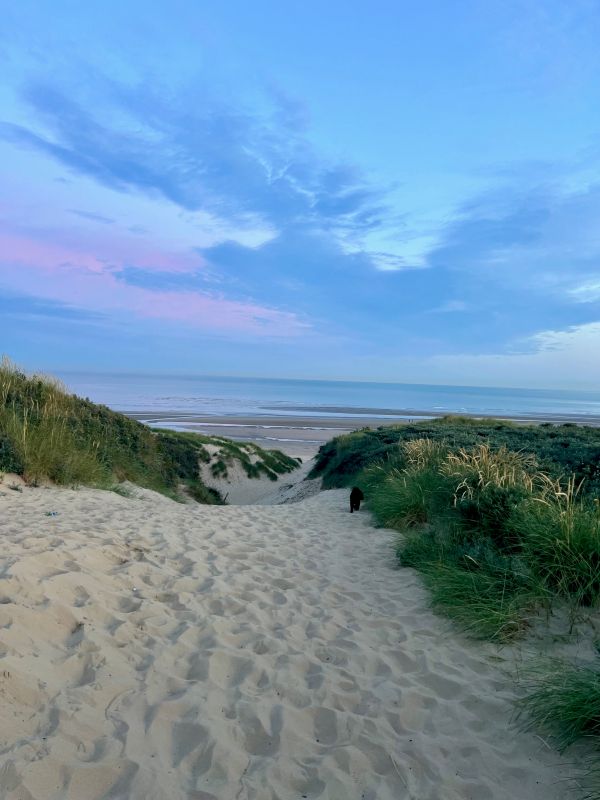
Standing on Camber Sands today you can still hear the wind rushing across the dunes, but the beach feels wounded. Instead of unbroken golden sand, the shoreline is littered with millions of tiny plastic pellets – bio-beads – spilled into the sea by Southern Water and now washing up in waves. From a distance, they look like black grains. Up close, they are a chilling reminder of how fragile our environment is, and how carelessly some treat it.
What has happened here is not merely a “pollution incident.” It is an environmental disaster – one that will scar this coastline and its ecosystems long after the headlines fade. Yet the reaction from those responsible, and from government, has been feeble. The contrast between the severity of the damage and the flippancy of the response is stark, and insulting to the communities now left to pick up the pieces.
A beach turned hazard zone
Bio-beads might be small, but their environmental footprint is enormous. Used in wastewater treatment, they should never escape into natural habitats. But escape they have – by the millions. They now speckle the sand, gather in clumps of seaweed and float in the shallows, waiting to be swallowed by the creatures that mistake them for food.
Birds, fish, seals, and other marine wildlife routinely ingest plastic, often with fatal consequences. These beads are exactly the size and shape that make them irresistible to the animals whose instincts tell them they’ve found a meal. Once inside an animal’s system, they block digestion, cause infections, or simply accumulate until the creature can no longer survive.
And it doesn’t end with wildlife. As tides drag the beads back and forth, they break into smaller fragments – becoming microplastics, too small for us to collect, too durable for nature to break down. Those fragments settle into the marshes, the dunes, the sediments beneath the waves. They enter the food chain. They enter us.
This disaster will not last weeks. It may last decades.
The dunes and marshes will suffer the most
The dunes and saltmarshes of Camber Sands form a living defence against coastal erosion, protect rare species, and support complex ecosystems that depend on delicate balance. Plastic pollution disrupts that balance in ways we may not fully understand for years.
Bio-beads tangle in the dune grass, lodge in the roots of stabilising plants, and bury themselves in the mudflats. The smaller they break, the deeper they penetrate – becoming part of the landscape. They threaten insects, invertebrates, birds, mammals, and the plants that bind the entire system together.
The human cost: anger, fatigue, and betrayal
For the people who live here, this beach is a part of their identity. It is where children play, where dog walkers stroll at dawn, where families spend their summers, where livelihoods depend on tourism and natural beauty. Now those same residents are rummaging through sand with rakes and sieves, volunteering their weekends to clean up a mess they didn’t cause.
Local councils are stretched thin. Volunteer groups are exhausted. People are frightened for their pets, unsure whether it’s safe to let them roam freely. And underlying it all is a simmering anger: why are we doing this, while those responsible offer only polite words and carefully crafted apologies?
Soft words for a hard disaster – and a cost that will fall on us
Southern Water has said it is sorry. Of course it has. Corporations are experts at apologising without ever sounding truly accountable. The company has blamed a mechanical failure – as if that somehow minimises the event – and assures us it will “work closely” with authorities and communities.
And let’s be clear about something else: Southern Water may say it will “cover the costs” of the clean-up, but we all know how this story ends. Those costs will not fall on shareholders. They will not dent executive bonuses. They will not land on the people who allowed this system to fail in the first place. They will land on us – the bill-payers.
Water companies operate in a closed loop where the public absorbs the financial fallout of corporate negligence. Fines, penalties, and clean-up expenses are quietly recouped through customer bills. It is a system designed so that pollution is merely a budget line – a cost of doing business that can always be passed on to the very people who suffer its consequences.
Then we come to the government’s response. Emma Hardy MP, the Water Minister, described the situation as “deeply disappointing.” Disappointing? A child forgetting their PE kit is disappointing. This is an environmental disaster – a spill that will leave a toxic legacy long after the minister has moved on to their next portfolio.
She also said she would “work with Southern Water” to determine if action should be taken. If? The damage is plain to see – reaching even as far as France. Wildlife is at risk. Communities are shocked and overwhelmed. The entire ecosystem is polluted. And yet she’s still at the stage of deciding whether action is required.
Why are we using plastic pellets at all?
What makes this disaster especially maddening is that bio-beads are not the only option. They are simply the cheapest for the companies using them – not the safest, not the most responsible, and certainly not the most sustainable.
There are natural or lower-impact alternatives already available, including:
- Mineral-based filter media such as pumice or expanded clay – porous, effective, and harmless if lost.
- Sand filtration beds, a proven, long-established method that uses zero plastics.
- Fixed-bed or membrane bioreactor systems, which host biofilms without the need for trillions of loose plastic pellets.
- Organic media biofilters, such as woodchip-based systems used in ecological treatment setups – biodegradable and environmentally benign.
None of these alternatives would seed an entire coastline with microplastics. None would grind into toxic dust that infiltrates every corner of an ecosystem. Bio-beads are used because they are cheap, not because they are wise.
The long-term consequences will be severe
This disaster is not temporary. Plastic does not politely disappear once we’ve fumed about it on social media.
Here’s what Camber now faces:
- A poisoned food web: creatures ingest the beads, predators eat those creatures, and toxins accumulate.
- A new layer of microplastics: every tide grinds the beads smaller, embedding them deeper into the coastline.
- Disrupted habitats: dunes and marshes rely on stable ecosystems – the kind plastic pollution quietly breaks.
- Tourism fallout and decline: who wants to lay down a towel on a beach filled with plastic pellets?
- Community exhaustion: clean-ups will go on for months or years. The beads reappear as fast as they are collected.
This is a dangerous precedent: if Southern Water avoids real consequences, the message will be clear: pollution is a PR issue, not an offence.
This demands more than sympathy
We cannot keep shrugging our shoulders every time a water company contaminates our coastlines. We cannot keep accepting gentle words where firm action is needed. The people of Sussex deserve better. The wildlife deserves better. The coastline deserves better.
Southern Water must face real accountability – not internal reviews, not vague promises, but meaningful consequences. The government must stop offering mild disappointment and start defending the environment with the seriousness it demands.
And regulators must prove they have teeth.

CLICK HERE TO DONATE TO OUR CROWDFUNDER
HELP US BECOME STRONGER SO THAT WE CAN CONTINUE TO DELIVER POWERFUL CITIZEN JOURNALISM!






