


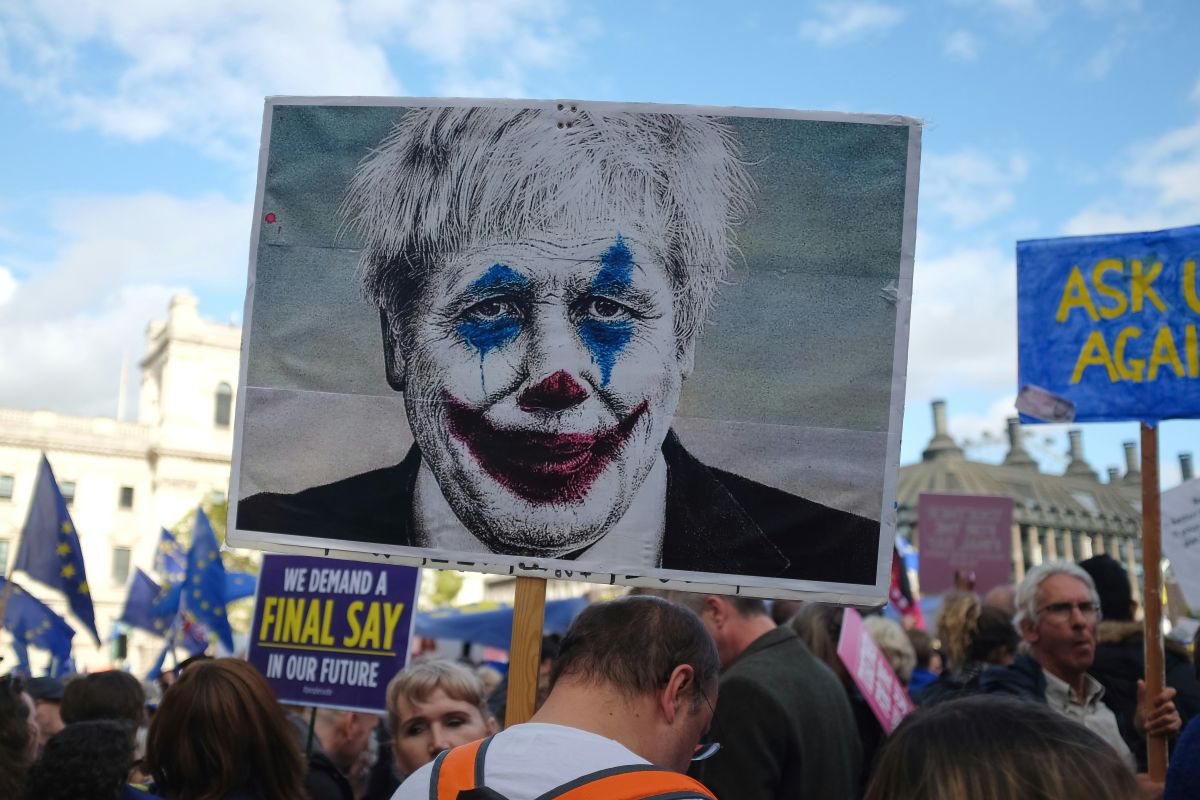
The Brexit debate has not waned in the last decade. Should the EU really be central to our thinking? Should we be divided as we are? A worker’s perspective.
In 2015 David Cameron decided to hold the ‘Brexit’ Referendum to shut up the opposition within his own Party and shore up his position as PM.
As a life-long Trades Unionist and manual worker, I didn’t see how this had anything to do with me.
However, over the next two years I found out my daughter was terrified her friend would be deported if we left the EU. My Italian friend planned her move to the South of France, and another friend who happened to be a Sikh from Wolverhampton campaigned to leave due to the racist abuse received from her Polish neighbours, who’d told her she had no right to live in Europe.
What about the workers?
Talking to other workers I knew at the time, I learned a Channel fisherman was certain he would soon be out of business with the French and Dutch factory ships scouring the Channel sea floor, destroying the habitat and the hatcheries for the fish to regenerate off our coast. Farm workers I knew saw Eastern European colleagues working for less than the minimum wage and living in dire conditions, undermining decades of campaigning by the National Union of Agricultural and Allied Workers , Transport & General Workers’ Union and Unite.
As an Agricultural delegate to Unite’s South East Regional Committee at the time, I saw full time officers put forward seemingly cogent arguments to remain within the EU, and delegates to the European Trades Union Council committees do the same, but it struck me (as it must have done others) as them simply trying to make their own jobs easier, getting worker’s benefits without putting the work in themselves.
Is this a solution?
During the campaign, I heard from rail workers working for UK rail companies owned by other EU States for worse pay and conditions than their continental colleagues (a friend met a rail worker from Seaford who had decided to work on Rouen Railway Station for SNCF because he was better off commuting to Dieppe each week and staying in Rouen). All of this due to British privatisation.
By June 2016, it became crystal clear David Cameron had no idea what he was talking about. In spite of having convincing arguments on many issues, the ‘Remain’ campaign was smug and complacent.
Then we vote.
So when it came to vote I was balancing the benefits of the EU (which mainly seemed to be for people richer than me), the rise of racist rhetoric within the ‘Leave’ campaign (ironic since increased Commonwealth immigration means more brown faces not fewer), my daughter’s anxiety for her friend, the decimation of Channel fishing, our national assets being snapped up by EU State assets (from EDF and DPD to Trenitalia). I genuinely did not know how I would vote as I walked to the polling booth. What finally swayed me to vote Remain was the rise of nasty racist attitudes from UKIP supporters (as they were then).
Instant disappointment.
This was a decision I almost instantly regretted listening to the patronising, ignorant and ill-informed comments of ‘Remainers’ when they realised they’d lost. Clearly the majority of people had voted emotionally and in self-interest, rather than considering the consequences.
As Tony Benn put it ten years previously: “Our problems are complex, interesting and important, our politics are simplistic, boring and trivial.” So what now?
I’ve since learned there was a clause in the Lisbon Treaty (article 189b clause 157) which led Bob Crowe and others to form a Trades Union leave campaign (No2EU) in the belief they could only push for re- nationalisation outside the EU. This clause has been dropped since we left.
The EU’s democratic deficits are concerning.. They ignored referenda in Ireland and the Netherlands in 2009, the Troika (EU Commission, ECB, IMF) bankrupted Greece in 2015 even though their Finance Minister Yanis Varoufakis had detailed a way to avoid this, pointing out it was the European Central Bank’s austerity that had caused the problem in the first place. ( Yanis Varoufakis | Full Address & Q&A | Oxford Union).
The EU today
With the rise of Nationalism and White Supremacy within the EU, we are looking more at ‘Fortress Europe’ than a Global Trading Bloc at the moment. With the spiteful, grandstanding nature of the Brexit negotiations on both sides, I very much doubt the UK could re-enter the EU on the terms we had before, and of course a more onerous deal would never be acceptable to the British people.
Where do we go?
So, it seems to me the answer lies in looking at a deal along the lines of the EEA. Standardising our production standards to EU regulations is the price we pay to trade with our largest neighbouring bloc. Not being at the table to negotiate those standards is much less important than keeping control of our economy, currency and democratic institutions. I suspect we’d go the way of Greece otherwise.
In the long term, supporting campaigns to democratise the EU (such as DiEM25) could lead to an ever-closer union, but all of us considering the consequences and effects of our alliances is more important. This requires much greater political literacy and the willingness to listen carefully to our opponents. 3000 years ago, Socrates said “There is no democracy where there is no education”.
It seems to me this applies to us now more than ever.

CLICK HERE TO DONATE TO OUR CROWDFUNDER
HELP US BECOME STRONGER SO THAT WE CAN CONTINUE TO DELIVER POWERFUL CITIZEN JOURNALISM!






