Sussex Bylines has been covering the story of the campaign to keep Wellsbourne Healthcare as a non-profit Community Interest Company (CIC). Established as a GP surgery seven years ago, it is much-loved locally and nationally-admired, with an ethos based on community engagement and wellbeing. Most people in the community know now that the contract to run the surgery was to be handed to a Leeds-based corporate but that the tender process was deemed sufficiently flawed as to be overturned on final appeal.
The story got its first exposure when one of the doctors at the practice wrote a piece in Sussex Bylines. This quickly got an unusual number of hits and seemed to resonate with patients and the community. It was then picked up by The Guardian, Compass, the BBC, Brighton Argus and also the medical press. The local MP and various councillors also put their shoulders to the wheel and a local petition garnered more than 3000 signatures in a matter of days.
A rare U-turn
Almost certainly, the U-turn only happened because of the huge public outcry and the passionately orchestrated campaign. But the story is not over. NHS Sussex has yet to make any formal statement as to the long run future of the contract and the community is still processing how these events unfolded as they did, not least because the existing practice seemed to be the very exemplar of what the government says it is trying to pursue in Fit for the Future, its ‘10 Year Health Plan for England’.
This was published in July with a core aim being to shift how the NHS works ‘from hospital to community: more care will be available on people’s doorsteps and in their homes’ and ‘from sickness to prevention: we’ll reach patients earlier and make the healthy choice the easy choice’. Central to this shift is the establishment of neighbourhood health centres which will ‘combine primary care, nursing, mental health, and other services and be available locally’. The government wants to have up to 1,000 such family hubs operating by 2028.
Brighton & Hove is something of a leader in this area already. In April 2024, the East & Central Brighton Primary Care Network (PCN) started a ‘health hub’ in Whitehawk offering multi-disciplinary services: nurses, physios, occupational therapists, pharmacy, social prescribing, mental health support, plus benefit and housing advice.
The hub aims to ‘demedicalise’ parts of the approach to health care and so achieve better uptake and more trust: better reach to people who might otherwise not engage with “clinical” services.
Moving away from traditional GP models
You can see where I’m going here. The existing Wellsbourne team has already shifted from the traditional GP model and is operating in ways integrated with how this emerging new policy direction will function.
Why would NHS Sussex want to change the Wellsbourne contract at this moment?
Why would they choose to give the contract to a commercial model run by a corporate conglomerate with no experience in the county? Is there some echo of what happened to the water industry here? Do they fully grasp what joined up planning is?
There doesn’t appear to be a definitive answer yet. The Independent Patient Choice and Procurement Panel which oversaw the final appeal noted that ‘Sussex ICB’s provider selection process … breached the regulations in four respects… (notably) its obligations… to act transparently and fairly.’ It also noted flawed financial modelling and a failure “to keep a record of the reasons for its decisions”.
Mercifully, it did recognise the challenges involved in assessing Wellsbourne’s admired social model for community welfare, the issue at the heart of the whole policy move towards community involvement and community hubs.
Many people have been asking how on earth we got here and where we are now? As regards the first question we are – despite two Freedom of Information requests as to what additional costs the ICB incurred – not much wiser as to how it all unfolded. As to what comes next, no one is saying.
One thing we do know is that the campaign in support of the existing practice was a great success and that the community showed its strength by willingly and generously mobilising behind it. A lot of momentum was developed.
This needs to be maintained as NHS Sussex considers it options as to what it is going to do next. One thing for sure, funding for public services is not going to get any easier.
Lessons for the Phase 2
Some clear lessons have been learned from all this and it will be prudent to consider them as the next chapter develops. They apply not just to this battle but to others that will no doubt arise in other, even unrelated, areas.
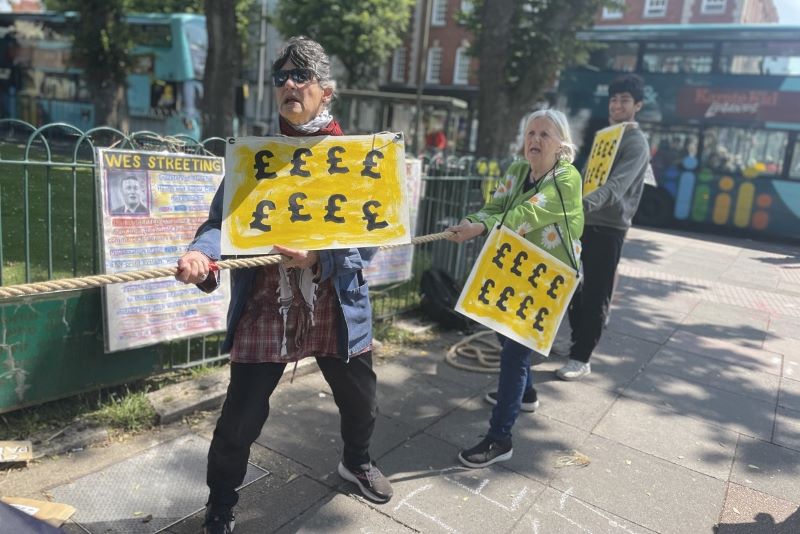
- Grassroots campaigning had a real impact: a general hullabaloo, with petitions and demos, was pivotal in influencing the decision here.
- Political leadership can amplify community voices: engagement from local and former MPs and councillors was critical in increasing pressure.
- Media exposure was vital in keeping the story in the public eye.
- Particular issues resonated at all levels of the campaign:
- The community has little or no enthusiasm for the profit motive in service provision in a deprived area, with all the obvious ethical, political and operational concerns.
- The decision-makers at the top are torn between different approaches but seem to have an inbuilt leaning towards short-term financial considerations.
- The decision-makers also seem to have a strangely casual regard to transparency. There should be no negotiation as to the necessity for clear decision-making and scoring. The fact that this was so easily swept aside should be embarrassing to the institutions involved.
- The whole system underrates the social value that a service (like Wellsbourne Healthcare) provides. The new 10-year Plan talks about the importance of continuity in healthcare matters and this means stability in staff, services, and relationships. It is apparent that the procurement process for Wellsbourne was unable to incorporate this properly despite it being a statutory consideration under NHS rules. If the bidding process for the contract is restarted we need to watch that such undervaluing does not continue.
For the moment, the various parties to the Wellsbourne drama are considering their options. NHS Sussex has commissioned (another) external review of the process and Brighton and Hove Council’s Health Overview & Scrutiny Committee is meeting on 26 September to discuss the situation. This includes “the decision to go to competitive tender” in the first place and “the degree and quality of community and stakeholder engagement that preceded the start of the tender process”.
In truth, everyone involved has been bruised by the substantial waste of energy, resources and time required and it’s still very far from certain what the final outcome will be.
All we can conclude for the moment is that the community and the local press need to keep a very close eye on developments.
CLICK HERE TO DONATE TO OUR CROWDFUNDER
HELP US BECOME STRONGER SO THAT WE CAN CONTINUE TO DELIVER POWERFUL CITIZEN JOURNALISM!