


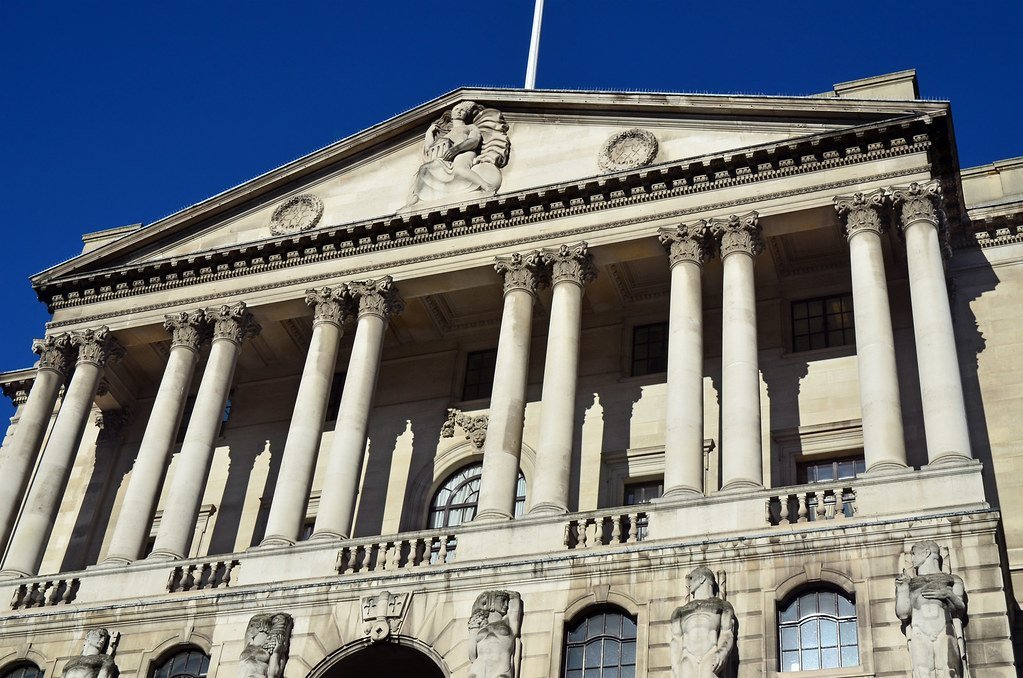
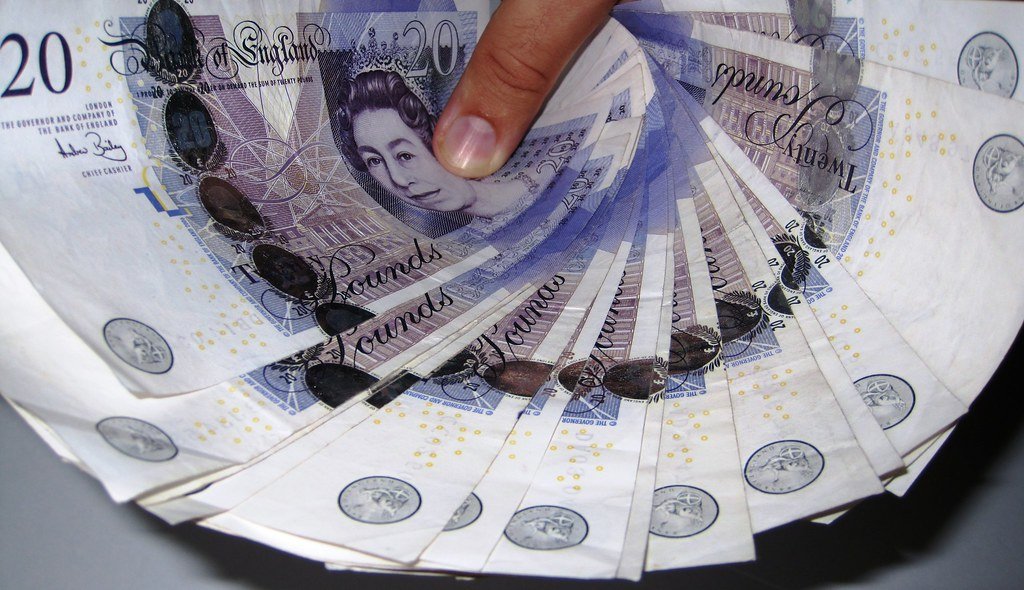
Virtually all money is created by banks, not by the state, argue some experts, most recently by Andrew Hook in a Sussex University research paper. Is this right? Yes, but perhaps also misleading. So, what exactly is a £? As it says on a banknote, a £ is an IOU, a promise from the Bank of England. As a promise, it is effectively created out of thin air. But why does a promise from the Bank of England have some special value? The Bank of Scotland hardly inspired trust after the 2008 crash.
In his book Postcapitalism Paul Mason argues that a currency requires trust. Bank of England £ IOUs are trusted because they are backed by the British state: in effect they are State IOUs. So why does the state not issue its own IOU promises?
The answer again is trust: a government would be too easily tempted to issue more IOUs than it could honour. Governments come and go, and, since the ability of politicians to keep promises is somewhat lower than their ability to make them, a lack of trust is not unreasonable. Hence the circuitous system by which £s are created by the Bank of England but backed by the State and used by the state.
In The Deficit Myth, Stephanie Kelton draws a dividing line between currency issuers (governments and banks) versus currency users (devolved authorities and the rest of us). Another dividing line is trustworthy/untrustworthy. As Truss and Kwarteng found, banks and the financial markets exercise strong vigilance over state-backed £ IOUs and severely punish straying over the trustworthy line.
Banks can also create £s
Hook is right that ordinary banks may be licensed to magic their own £ IOUs out of thin air, which they use to make loans. Indeed, he argues this is the main route for creation of new £ IOUs.
In theory, the creation of £ IOUs by banks is strictly regulated. In practice, this was forgotten, rediscovered after 2008, and has since been forgotten again. We need vigilance over how many £ IOUs banks create, and even more vigilance over how those £s are used. Abdicating responsibility is laying the groundwork for the next financial crash.
Not all £s are equal
Money can exist in different states, and any economic model that fails to recognise this is likely to lead to false conclusions. As a gross simplification, we can distinguish between “working £s” and “resting £s”. “Working £s” circulate in the economy, they buy goods or services, the seller receives £s, then uses them to buy other goods or services, and so on indefinitely. “Working £s” may be collected as tax and re-spent. If too many “working £s” compete for the same goods and services, it will lead to inflation. “Resting £s” are tied up in assets, bonds, housing, antiques, cryptocurrency etc… They are not necessarily competing, and I suggest will not have the same inflationary effect.

A monetary house of cards? Photo credit: Image by Robert Owen-Wahl (Shutterbug75) on Pixabay
Evidence for this difference was seen after the Truss/Kwarteng debacle. The Bank of England was forced to step in and buy back bonds it had previously issued, a process called Quantitative Easing. To do this, the Bank of England created new £ IOUs, so that at first sight, the number of £s in existence should have increased. However, if the new £s were used to remove bonds that were “resting £s”, the total number of £s in existence would not increase. The point is that the newly created £s were “working £s”, and the nominal £s in the bond were “resting £s”.
For inflation, the important measure is too many “working £s”, not the total number of £s.
See also by the same author:
A £ can disappear back into thin air
Not all £ IOUs that have been written still exist, others may appear to exist but are not available. In particular, most bank loans are secured against assets of variable value. When an asset of variable value is equated to a £, you can no longer be certain the £ still exists. When worrying about too many £s causing inflation, we should exclude the £s that will not contribute to it.
When a £ is removed from circulation as tax and a new £ is created via government spending, the old £ and new £ are identical. Almost all government spending is using these recycled £s.
This implies that the main role of tax is not removing £ IOUs but taking them from where they are less useful to where they may be more useful. Government spending should be judged on whether it achieves this purpose.
Also, when there is a narrow difference between the number of £ IOUs removed and created, small-scale effects such as disappearance or destruction of £s suddenly become important.
Measuring the wrong things
When inflation is caused by an excess of “working £s”, public borrowing is a very poor way of measuring the problem:
(a) Public borrowing may not be creating more £s, it may be re-using existing £s.
(b) As Richard Murphy, of Tax Research UK, points out, a lot of public borrowing is money the Government owes itself.
(c) Public borrowing is often private saving (Murphy again). Is safe-keeping of our savings a bad thing?
(d) £s spent by the State provide essential public services. We all benefit (even millionaires dislike potholes). We should think of State spending as investment. The Government is buying shares in the UK economy and its investment should gradually be returned as a “dividend” of tax.
(e) Not creating and investing enough £s can be far more costly. Think sewage, transport, or the years of “efficiency savings” in education and the NHS.
(f) The proper debate should not be over how many £s the State creates, but how it invests them. Well? Badly? Or not at all? What will be the “dividend”? £s that are created for good investment pay for themselves.
Inflation can have other causes
Putin’s war, the energy crisis, American politics. These may also cause inflation, which will not be cured by reducing the number of “working £s”.
In conclusion, the distinction between “working” and “resting” £s is not clear-cut. Some £s may be a bit of both. Also, some £s have definitely disappeared, but uncertainty arises when assets of variable value are treated as equivalent to £s. Those £s may just disappear if too many people try to access them.
If an economic model, for simplicity and elegance, chooses to treat all £s as equal, or to ignore £s that disappear, it will give wrong answers. A household can “balance the books”, but a government need not fully “balance the books” if some of its IOUs will never be presented. Vain attempts to “balance the books” have given us 12 years of austerity, crumbling services, and no end in sight.





