


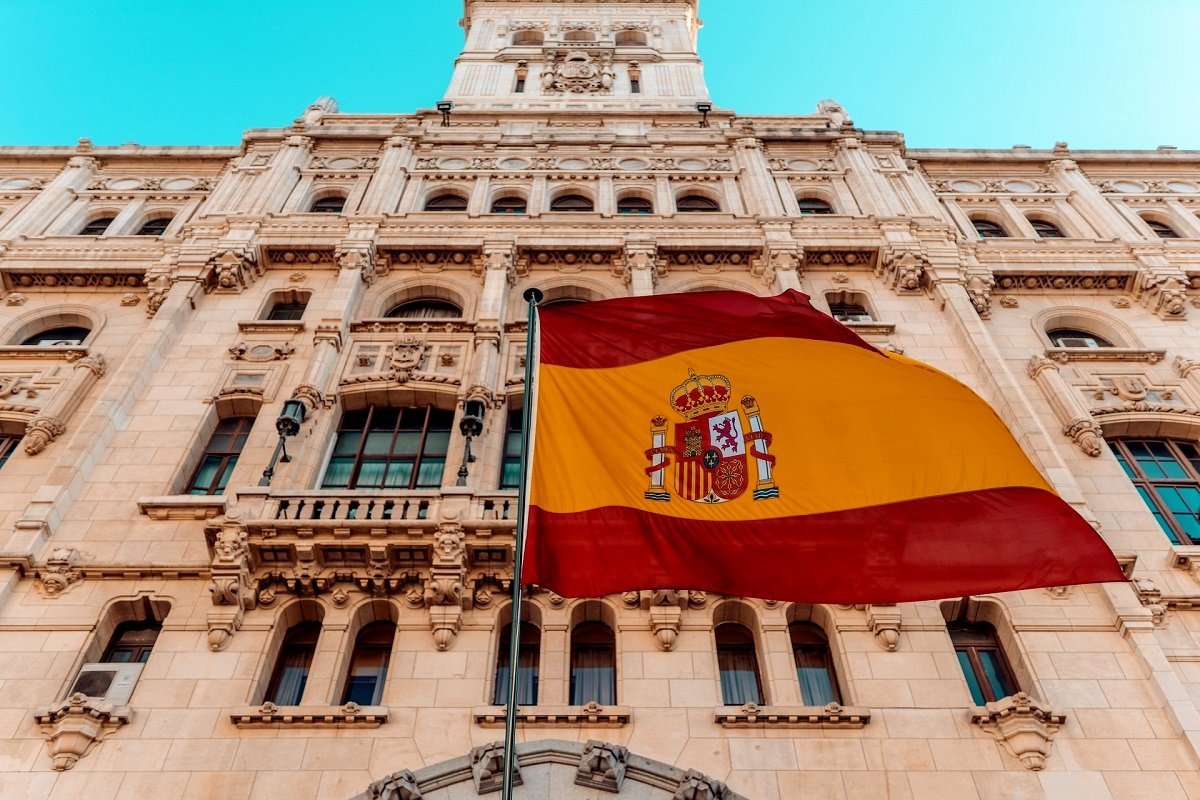
The result of the Spanish election held on 23 July, although a ‘hung’ parliament, was greeted with a sigh of relief in Brussels. It had been feared that, for the first time since Franco, the far-right in Spain might return to government.
In the event, with turn-out higher than expected, the radical right Vox party lost a third of its votes, with both the centre-right People’s Party (PP) and Prime Minister Pedro Sánchez’s Socialists gaining ground. Sánchez will, however, face a tricky path to remain in power, which will require the support of the left and regional parties, or possibly a re-run of the elections, as in 2015 and 2019.
Throughout the EU, the repercussions of the war in Ukraine, namely slow growth and high inflation, as well as increased pressure from refugees, have been driving domestic political change. This has resulted in advances by far-right parties in Italy, Sweden, Finland and Greece over the past year.
If Spain had followed suit, it could have signalled a wider sea-change in Europe ahead of next year’s European Parliament elections and given fuel to neo-fascist forces that want the EU to take more hardline stances on everything from climate policy to migration.
Spanish EU Presidency
Political paralysis in Spain will still present challenges for the EU, as Spain has just begun a six-month tenure of the EU’s rotating presidency, which chairs intergovernmental negotiations. Sánchez’s government had said its presidency would focus on reindustrialisation, green transition, social and economic justice, and European unity. Whether he will survive as Prime Minister to complete his programme for the EU remains to be seen.
A resurgence of the right, such as was feared in Spain, which joined the EU in 1986, has been seen in a number of other EU member states, including five of the founding members.
Germany: rise of the AfD
Germany, the largest economy in the EU has, since September 2021, been governed by a coalition of the Social Democrats (SPD), Greens, and Liberals (FDP). However, pressures created by the war in Ukraine, including on energy supplies, along with Covid-19 and increased immigration, mean that voter discontent is now benefiting far-right populists. Support for the Alternative für Deutschland party (AfD) at the national level has risen to a historical high, at 20 per cent, slightly ahead of the SPD itself.

France: whither Macron?
The victory of Emmanuel Macron over Marine Le Pen in April 2022 was welcomed by many who feared a President from the far-right. However, in the Assemblée elections of June 2022, the President’s coalition failed to gain a stable majority, while extreme parties of both right and left made gains.
In April this year, Macron was reduced to asking his Prime Minister Elisabeth Borne to trigger Article 49.3 of the Constitution, to enable him to pass a contentious pension reform without a vote in the Assemblée. In his latest government reshuffle he spurned the right, promoting political allies. However, he will face many challenges in the autumn, including pressure from the right and the far right on immigration.
Italy: the far right in power
The government of Giorgia Meloni, who leads Fratelli d’Italia (FdI – The Brothers of Italy) is a coalition of the right, with Forza Italia and Matteo Salvini’s League. With the death of its founder Berlusconi, many expect Forza to disintegrate. Meloni’s party is likely to gain the most from this, in a struggle with the League.
Meloni, who claims to promote traditional Christian values, has taken steps to limit LGTB+ rights on matters including surrogacy and adoption. Both the FdI and the League have historically been hostile to the arrival of non-European immigrants in Italy. This stance recently collided with reality, because of acute labour shortages, so the government has announced a large increase in work permits for non-EU nationals, while continuing to crack down on humanitarian rescue ships in the Mediterranean.
The Netherlands – what next?
The governing coalition of Mark Rutte collapsed in early July, having failed to get the support of the more progressive D66 Liberal party and the Christian Union, for a crack-down on migrant numbers. Rutte announced that he would stay on, but only as a caretaker, until elections, probably in November.
Whilst it is possible that his Conservative-Liberal VVD party may remain in power, a potential bid to re-enter Dutch politics by PvdA’s (Dutch Labour’s) first EU Vice-President Frans Timmermans, who has led work on the EU’s Green Deal, might possibly change this dynamic.

Breakup of Belgium(s)?
There is currently speculation that Belgium, the country which houses the headquarters of both the EU and NATO, but has a history of dysfunctional politics, may be on the verge of breaking up. Elections are due in June 2024.
The far-right Vlaams Belang party, which advocates an independent Flanders, is currently ahead in the polls, on an anti-immigrant platform. Their aim would be to form a coalition with the Flemish Nationalist party (N-VA) and then declare unilateral sovereignty, forcing French-speaking parties to negotiate partition. Other parties have vowed not to co-operate with the far-right, but such action could lead to a blockade of political institutions.
The Visegrád group
This group, comprising Poland, Hungary, the Czech Republic, and Slovakia, which became members of the EU in 2004, have traditionally been regarded as on the right within the bloc. But in a growing divergence, the Czech Republic and Slovakia are now closer to Brussels, while Poland and Hungary both have rule of law issues in the eyes of the EU Commission.
Since the advent of the Ukraine war, Hungary is felt to have had uncomfortably close relations with Russia. Poland has, however, played a leading role in supporting Ukraine and sheltering refugees. Its right-wing Law and Justice party (PiS), led by Mateusz Morawiecki, is seeing its opinion-poll ratings fall against a strong adversary in Donald Tusk, a former President of the European Council.
Prime Minister Morawiecki is talking of holding a referendum on migration to coincide with an election scheduled for this autumn – a tactic previously used by Victor Orbán in Hungary.
The European Political Community
Europe, however, as we in Britain know to our cost, is not defined solely by the EU. The fact that the UK is no longer an EU member possibly gives credence to the opinions of a leading Spanish centre-right politician, Esteban Gonzalez Pons MEP. Interviewed on the BBC’s Today programme, he did not think that Brussels was concerned about a possible PP coalition with the far right in Spain because: “The UK government is more right-wing than Vox.”
What are we to make, then, of the fact that both Liz Truss, when Prime Minister, and her successor Rishi Sunak, have embraced an initiative by President Macron to establish the European Political Community (EPC), to enhance European co-operation beyond the EU?
There are now 47 members (Russia and Belarus are excluded). The UK has offered to chair the fourth meeting, scheduled for Spring 2024. Perhaps the UK’s ‘far-right’ government is finding that the reality of ‘sovereignty’, namely, political isolation, is not so comfortable as they once thought?





