


Those wanting to vote in person at the local elections this May will have to produce photographic proof of their identity of the right type. The government says the new rules, in the Elections Act 2022, are to prevent ‘personation’ – that is, the crime of pretending to be, and voting as, someone else. It says the aim is to give the public confidence that election results are sound.
Critics say personation is so rare that the new rules are a disproportionate response which will prevent some people from voting – especially those unlikely to vote Conservative. Research by the Electoral Commission shows that personation is very rare – probably because it would be nearly impossible to use it to swing the result of an election undetected. But the Pickles review points to vulnerabilities in the current system.
Electoral fraud came bottom of nine concerns that surfaced in an Electoral Commission public opinion tracker survey. Respondents were asked which of nine things most concerned them. It turned out people were more concerned about, among other things, foreign influence on UK elections and inadequate regulation of the money political parties spend on their campaigns.
Mandatory voter ID
But presenting your ID at a polling station will now, nevertheless, be compulsory. The government says most voters already have a type of photo ID. These are ones that someone living in Sussex is likely to have (or could apply for):
| A UK, Commonwealth or EEA passport |
| A driving licence issued in the UK, the Channel Islands, the Isle of Man or an EEA state |
| A biometric immigration document |
| An identity card bearing the Proof of Age Standards Scheme hologram (a PASS card) |
| A Ministry of Defence Form 90 (Defence Identity Card) |
| A concessionary photo travel pass from Oyster 60+, a Freedom Pass, or a concessionary travel pass from a scheme funded by any of the UK governments |
| A War Disablement SmartPass or War Disabled SmartPass – A 60+ SmartPass – A Half Fare SmartPass |
| An electoral identity document (aka a voter authority certificate) |
| An anonymous elector’s document |
| A national identity card issued by an EEA state |
| A Blue Badge scheme card issued in Great Britain or Northern Ireland |
However, Electoral Commission research indicates that about two million voters don’t have any standard form of ID – and that this is proportionately more common among the disadvantaged.
Additions to the list, suggested in parliament by Conservative former minister Lord Willetts, included library cards and workplace or student ID cards. These were rejected by the government as being “insufficiently secure”.
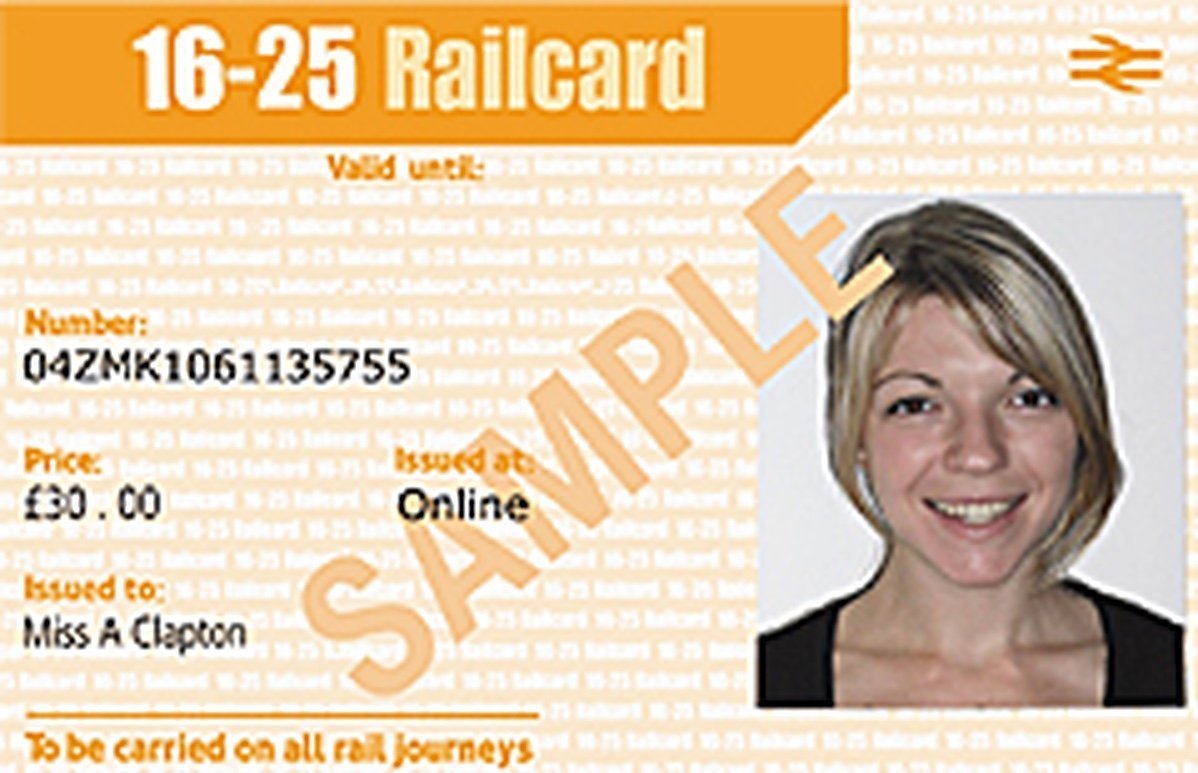
So, for example, Oyster 60+ cards and senior bus passes are included, but not 16-25 railcards. The issuers of each of these appear to require the same information and so it is not clear why one is sufficiently secure but the other not. Critics suggest it’s because opinion polling shows young people are much less likely to vote Conservative than older people. In a statement, University of Sussex Students Union told us:
“We unequivocally see the government’s implementation of Voter ID as an opportunistic attack on the right to vote that rolls back decades of progress made. If you are a disabled person, a trans person, a migrant, someone without the funds or a fixed address or a student, then you are less likely to have identification to vote and, for many of these groups, the process to obtaining ID is fraught with barriers.“
They are encouraging students to “fight back against this regressive legislation” and sign a national protest petition calling for the scheme to be scrapped.
If you are one of the two million without ID, you can get a voter identity card free from your local electoral registration office. To find yours, contact your local Electoral Registration Office. Or you could apply for a postal vote; some parties are already urging their supporters to do so.
Plan ahead for free ID
To get your voter identity card, you need to provide the same information as you did to get on the electoral roll, plus your national insurance number and a passport-sized photograph. The photograph does not need to be verified as you by a third party. If, for some reason, you cannot provide the basic information, you can provide other documentary proof of your identity which the electoral registration office will specify for you.
It should be possible for anyone eligible to vote to get a voter identity document. It will take time, however, and those who do not plan ahead, or who miss the promised information campaign, risk being turned away on election day – as do those whose ID is rejected as inadequate.
Survey data from the Electoral Commission’s public attitudes report suggests requiring voter ID will deter only slightly more people from voting than it will encourage.
Fraud in Northern Ireland
Voter ID has been necessary in Northern Ireland since 2002. But it was brought in as a result of public concern about documented evidence of personation. The Electoral Reform Society reports that at the 1983 general election, 949 people arrived at polling stations in Northern Ireland only to be told a vote had already been cast in their name. Police made 149 arrests for personation, resulting in 104 prosecutions.
Turnout in Northern Irish elections does not seem to have been affected by the requirement. However, now Voter ID is being rolled out throughout the United Kingdom, there is a risk of confidence in election results being undermined. Especially if people are turned away at polling stations – the disease which it was supposed to cure.
Politicians give their verdict
Martha Rayner, who writes for Sussex Bylines and is a member of the Youth Parliament in West Sussex:
“I’m strongly against Voter ID. It’s undemocratic and I think it is likely to exclude significant numbers of young voters. Rather than disenfranchising them, I believe that the voting age should be dropped to 16, to give young people a stronger voice in their futures.“
Josh Babarinde, Liberal Democrat parliamentary candidate for Eastbourne:
“There’s more chance of being struck by lightning 52 times in a row than there is of being a victim of voter fraud. This is nothing more than a voter suppression attempt by a Conservative Party that will try every trick in the book to silence the will of those who dare to speak out against them at the ballot box.”
“It is completely unworkable, unnecessary and risks locking people out of voting.”
Helena Dollimore, Labour parliamentary candidate for Hastings & Rye:
“Yet again the Conservatives have got their priorities all wrong. During a cost of living crisis when people are struggling to make ends meet, it is an outrage that they would rather spend money on disenfranchising people. Voter ID is a total waste of taxpayers’ money and will cost millions. Not only is the Tory Voter ID plan completely unworkable, it is unnecessary and risks locking people out of voting. Voting is already safe and secure in Britain. Ministers should be promoting confidence in our elections instead of spreading baseless scare stories which threaten our democracy.“
Emily O’Brien, Green Party parliamentary candidate for Lewes:
“Mandatory voter ID is a very expensive solution to a problem which simply doesn’t exist – there is very strong evidence that there is no voter fraud problem in this country. Not only will it reduce turnout overall but it will make it harder for people in marginalised groups to vote. It’s also a practical nightmare. As a councillor, I’ve seen first hand how challenging this new requirement is: councils are worried about queues at polling stations, and many are worried about whether they will even be able to staff them, as staff understandably express their concerns about turning from helpers of democracy into ID police.“





