


All I did was accept an invitation ‘to take tea’. And it opened a can of worms!
Brighton museums have been putting on an interactive tour of the remarkable Preston Manor, exploring the tortuous story of the tea industry and how the humble leaf has inveigled its way into every corner of our lives. It tells you a lot more than just whether you should put the milk in the cup before the tea or afterwards, if you remember that burning question of tea-drinking etiquette.
Tea was drunk in China for well over 1000 years, but this is the story of how it found its way to become Britain’s favourite drink. It’s a well-documented story, of course, but the Preston Manor angle brings it all vividly to life.
The Stanfords of Preston Manor
Until her death in 1932, Preston Manor was owned by Lady Ellen Stanford, and taking tea for her was an important way to entertain friends and acquaintances while showing off her beautiful cups and teapots. Fantastic and beguiling as she and the famously haunted house are though, there’s a lot more to this particular show than just those delicate Edwardians.
The Stanfords were the wealthiest family in Sussex. They hobnobbed with the smart set of the day, entertaining in the house, at one time or another, Rudyard Kipling, Baden Powell, Princess Beatrice and numerous other Sussex grandees.Their fortune had been made through land, shipping and judicious marriage, all of which, naturally, tie in to the trade routes of the Empire and the dark streams that ran along them.
From our excellent guide, we learned about the incredible clipper ships which were used to race to China to bring back the tea. We heard about how, using smuggled seedlings, plantations were then developed under the Raj and how, as tea became the non-alcoholic drink of choice in Britain, land and labour on the far away estates were worked to the bone. Fascinating displays then illustrated how opium production was developed so that the opium balls could be exchanged for tea, and how the wealth generated in these trades found its way back to the British landed classes, including the Stanfords.
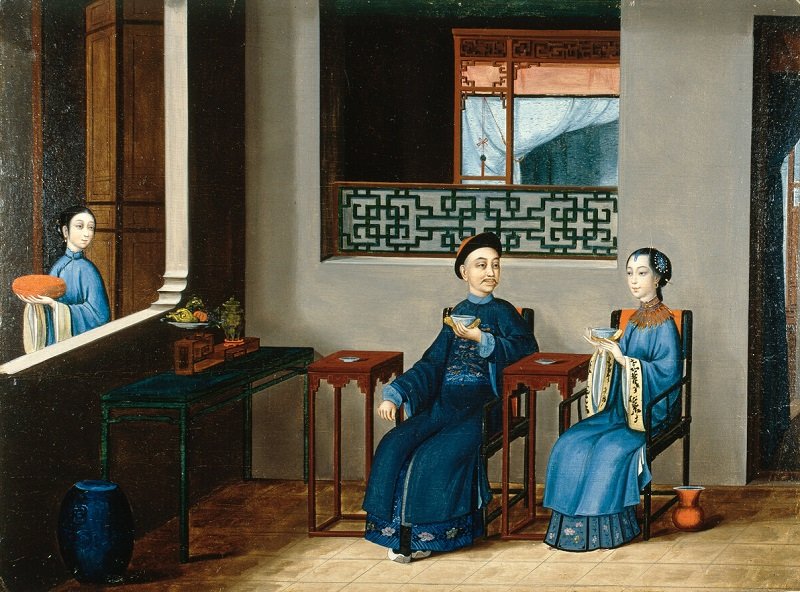
Tea drinking spreads across the world
Some of this has a special resonance for me because, 40 years ago, I did some work on the economics of tea in Africa. This involved staying for a couple of months on a plantation in southern Malawi, on the slopes of Mount Mulanje. This had ghosts too, but for different reasons.
I remember an old white man telling me that his grandfather had walked into the Thyolo district there, some 90 years before, just at the time Queen Victoria died. He had hiked for a month from the coast and had barely seen an African. It turned out this was because the best route in was the same one the slave caravans used to take only 40 years before that, and the whole place had become cursed and depopulated. The horror was such that everyone for miles around ran away and it was many years later before people dared to come back.
This was all in the threatening shadow of the great massif on the horizon, visible in all directions. The mountain held a special place in the collective memory because this was where the tributary caravans used to rendezvous to aggregate their dreadful cargoes, before the whole wretched multitude was herded down to the coast, thousands of chained slaves shadowed all the way by scavenging vultures, leopards and other wild beasts. By the time Livingstone got there and wrote about “manacled women and children” and men “kept in by an iron rod which was riveted at both ends across the throat”, the area’s terrible reputation was sealed.
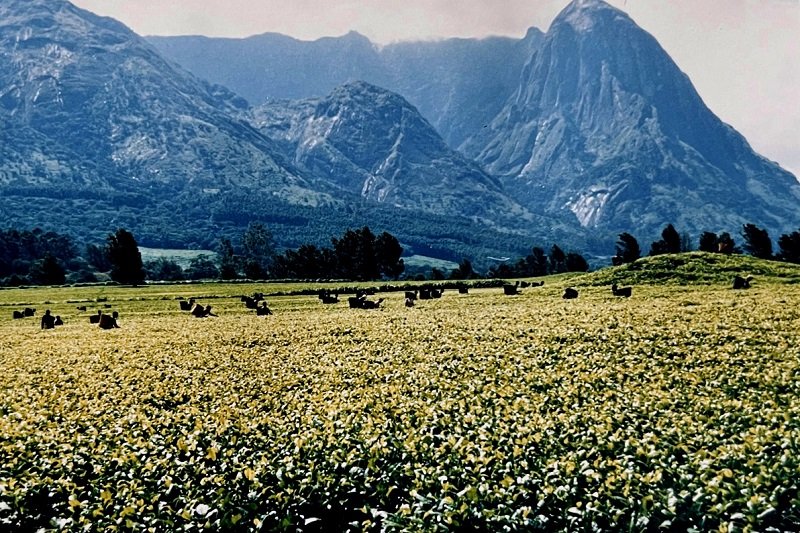
Tea production starts in Africa
It was a tip-top place for tea though. The soil was good and there was optimum sunshine and moisture and the settlers realised they could use the well-trodden path to carry the tea bales out to the sea. With world demand for tea still accelerating at the beginning of the 20th century, and Africa rapidly becoming the next continent to grow the leaf, this little enclave was a near perfect spot.
Sometimes I would go out and watch the gangs of women pickers as they laboured in the field in the hot sun. Pick ‘two leaves and a bud’ was the mantra. The industry wanted only the growing tips as this is where the aroma, flavour and quality is. The plant is fast-growing so pickers would be out almost constantly, snipping off the regrowth. The fundamental problem was that these relatively remote plantations struggled to compete on price and quality with growers in other parts of the world, so there was constant downward pressure on wages and work practices.

Tea picking’s a harsh life
Tea picking was, and still is, a harsh life. It’s still the same calculation now, but the industry in Malawi battles on, no doubt trying to improve even as all the various challenges of growing tea, in fact doing agriculture in the tropics generally, persist. In fact, there are similar issues and dilemmas with many of the agricultural commodities we consume by the millions of tons: coffee, cocoa, rubber, timber, tobacco, vanilla, coca leaf – you name it, most of them get here on a road of tears.
Ironic then, that at the end of the Preston Manor tour you get that very British panacea for pain, a nice cuppa – Earl Grey, Assam, Darjeeling, Ceylon – all those evocative names. There are ghosts at every turn, but it didn’t detract from my enjoyment of the show. Don’t miss it, there’s only a few days left.
More Lapsang Souchong, vicar?
Shadows of Empire: Taking Tea at Preston Manor. Saturdays & Sundays to 27 October. Slots available between 12-2pm & 2-4pm. Admission includes a souvenir guide and a cup of tea.

CLICK HERE TO DONATE TO OUR CROWDFUNDER
HELP US BECOME STRONGER SO THAT WE CAN CONTINUE TO DELIVER POWERFUL CITIZEN JOURNALISM!






