



There was a time when growing up followed a rhythm that most people recognised. You left school or university, found a job, rented somewhere of your own, saved what you could, bought a house, perhaps raised a family and, after decades of work, looked forward to a retirement supported by a state pension.
Life was never as straightforward as memory sometimes suggests. There were recessions, unemployment, soaring interest rates and periods when people wondered how they would make ends meet. Yet beneath it all lay an unspoken confidence that tomorrow could be shaped by the choices you made today.
I sometimes wonder whether that confidence has quietly slipped away.
The more I listen to today’s young adults, the less I hear people asking for an easier life. Instead, I hear people trying to make sense of a future that feels increasingly difficult to picture. They are not frightened of hard work. Most expect life to be challenging. What unsettles them is something altogether different: the feeling that the ground beneath their feet never seems to stop moving.
Much of that uncertainty begins with something as fundamental as having a place to call your own.
Delayed independence
For many young adults, living with parents is no longer a stepping stone between education and independence. It has become the only financially realistic option. I have met people in their late twenties and early thirties with good jobs, sensible spending habits and every intention of standing on their own two feet, yet they remain in the bedrooms they grew up in because renting absorbs so much of their income that saving for a deposit feels almost impossible.
There is no shame in families supporting one another. In many ways it is something to be celebrated. Yet there is also a psychological cost when adulthood is delayed through circumstance rather than choice. Home is where we first learn who we are, but it is also the place we eventually leave in order to discover who we might become. When that journey is postponed indefinitely, it quietly changes the way people imagine the future.
Housing, though, is only part of the story. For today’s young adults, the pandemic was not simply a public health emergency or a historical event. It arrived during the very years when friendships deepen, confidence grows and identities begin to settle. Classrooms fell silent, first jobs disappeared, university life moved onto screens and ordinary moments of growing up were placed on hold.
Many adapted with remarkable resilience. Some even found strengths they did not know they possessed. Yet for others there remains the feeling that an important chapter of life was interrupted before it had properly begun. That loss cannot be measured in economic terms, but it forms part of the emotional landscape they now carry into adulthood.
Alongside this comes a working world changing at extraordinary speed.
Constant adaption is exhausting
Young adults are still encouraged to study hard, gain qualifications and build careers, yet they are entering employment at a time when technological change is accelerating faster than many of us have witnessed before. Artificial intelligence promises remarkable opportunities while simultaneously raising questions about how professions may evolve over the coming decades. Whether every prediction proves accurate is almost beside the point. Many are beginning their careers wondering whether the skills they develop today will still be enough tomorrow.
Living with that degree of uncertainty asks people to adapt continually, and constant adaptation can become exhausting.
Perhaps that helps explain why conversations around mental health have become so much more frequent. Older generations sometimes mistake that openness for fragility, yet I increasingly wonder whether the opposite is true. Previous generations often suffered in silence because they believed they had little choice. Today’s young adults seem more willing to speak honestly about anxiety, burnout and depression, not because they expect life to be free of difficulty, but because they understand that pretending everything is fine rarely makes it so.
Many workplaces genuinely want to support wellbeing, yet too often the culture has not caught up with the conversation. Expectations remain high, workloads continue to grow and success is still measured more readily by visible busyness than by thoughtful work. For someone already struggling, asking for understanding can still feel like taking a risk rather than being offered support.
This is especially true for many neurodivergent young adults. Greater awareness of autism, ADHD and dyslexia has helped countless people understand themselves in ways that might once have been impossible. For many, a diagnosis brings relief because it finally explains experiences that never seemed to fit the expectations placed upon them. Yet understanding is not always accompanied by acceptance.
Too many still find themselves adapting to workplaces designed around a single way of thinking while the workplace itself changes very little in return. When people spend so much energy masking who they are simply to belong, it inevitably takes its toll.
Even retirement, something that ought to feel comfortably distant, has become another source of uncertainty. I have been struck by the number of young adults who genuinely wonder whether the state pension they spend a lifetime contributing towards will still exist in anything like its present form. They hear debates about ageing populations, public finances and increasing pressure on future generations, and begin to question whether the promises society once made will still be there when they need them.
Whether those fears ultimately prove justified is almost beside the point. What matters is the psychology of growing up believing that even decades of hard work may no longer guarantee the sense of security previous generations quietly expected.
News and updates are constant
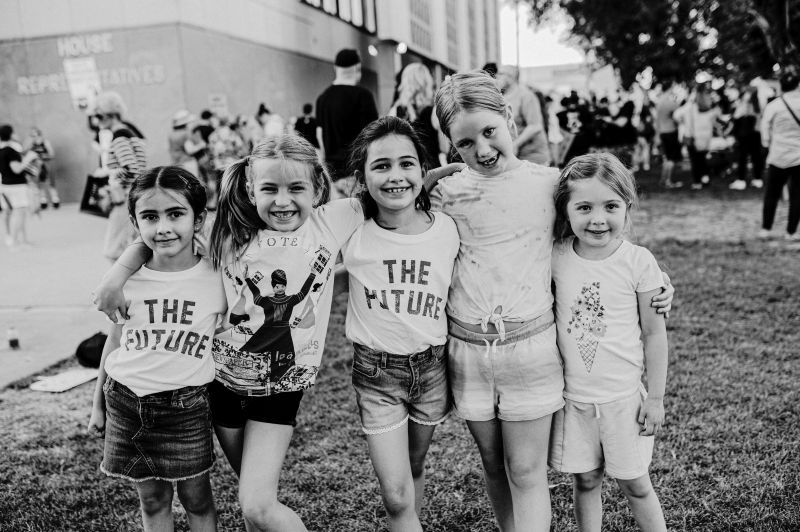
Meanwhile, the wider world now arrives every waking hour through a screen small enough to fit into a pocket.
My grandparents waited for the evening news. My parents unfolded a newspaper over breakfast. Today’s young adults wake to wars, death, economic uncertainty, political division, climate change and humanitarian crises before they have even climbed out of bed. Human beings have always worried, but no previous generation has carried quite so much of the world’s anxiety with them every moment of every day.
Social media adds another layer. Used well, it allows people to learn, connect and find communities they might otherwise never have discovered. Used badly, it quietly convinces us that everyone else is progressing through life more quickly than we are. Someone is always earning more, travelling further, buying a home sooner or celebrating another milestone that still feels frustratingly out of reach.
It becomes remarkably easy to believe you are falling behind when, in reality, you are comparing your ordinary life with someone else’s carefully edited highlights.
None of these experiences, taken individually, define a generation. Together, however, they create a particular state of mind. Not despair, but uncertainty. Not hopelessness, but the feeling that the future has become something to negotiate rather than something to build towards.
Many young adults have shown extraordinary resilience. Yet there is a difference between resilience and living in a state of permanent adaptation. Even the strongest people need periods of stability in which to build a life rather than simply recover from the next disruption.
For all that, I remain optimistic.
Our young people give us hope
Not because these challenges are small, but because I have been consistently impressed by the young adults I have met. They are thoughtful, compassionate and remarkably adaptable. They speak more openly about mental health. They value inclusion. They question unhealthy working cultures instead of accepting them simply because ‘that is how things have always been done’. They care about purpose as much as pay, and many measure success not only by what they earn but by the lives they are able to live.
Those are not signs of a weaker generation. They may prove to have precisely the qualities the future demands.
Every generation inherits problems it did not create. Our grandparents rebuilt after war. Their children navigated economic upheaval and enormous social change. Today’s young adults have inherited something rather different: not one defining crisis, but the cumulative weight of uncertainty itself, each new disruption arriving before the last has fully settled.
Perhaps that is where the rest of us have a responsibility.
Hope is not created by telling people to be optimistic. It grows when societies give them reasons to believe that effort will still be rewarded, that decent housing is attainable, that workplaces value people as well as productivity, that difference is welcomed rather than merely tolerated, and that the future remains something worth investing in.
The young adults I have spoken to are not asking for certainty – they know life has never offered that. Nor are they asking for an easy life. What they are asking for is possibility.
The possibility that hard work will still open doors. That saving for a home is not an impossible dream. That raising children can still be an act of hope. That growing old will bring security rather than anxiety. That technology will serve humanity rather than diminish it.
Above all, they are asking for something that every generation deserves: the confidence that the ground beneath their feet will remain steady long enough for effort, commitment and hope to mean something.
Every generation leaves something behind for those who follow. Money can be spent. Buildings can crumble. Even institutions change.
But confidence in the future is a remarkable inheritance. It would be a tragedy if we allowed that to disappear just when a generation needs it most.

CLICK HERE TO DONATE TO OUR CROWDFUNDER
HELP US BECOME STRONGER SO THAT WE CAN CONTINUE TO DELIVER POWERFUL CITIZEN JOURNALISM!







