Around a year ago, at a glitzy star-studded ceremony in Copenhagen, a new luxury cruise liner was launched. With its name officially bestowed by Sophia Loren, the operational life of the MSC Euribia could hardly have begun more glamorously. The newest ship in a fleet run by MSC Cruises, the Euribia has received glowing profiles in glossy magazines, hailing it as a pioneer in a new era of ‘sustainable cruising’.
Euribia’s central environmental claim is carbon neutrality. Rather than running on heavy fuel oil like most shipping, Euribia uses bio-LNG (liquefied natural gas). This biogas is produced by anaerobic microbial digestion of organic matter to produce a mixture of methane and carbon dioxide.
This is then burned just like fossil gas, with the defence that the emissions are offset by the carbon sequestered by the organic feedstock. Several feedstock types are used to produce biogas, usually municipal waste, livestock manure or crops.
Is biogas really sustainable?
While advocates of biogas emphasise its use of waste – the engineers at MSC Cruises claim that Euribia will use bio-LNG from manure – in practice, manure produces a relatively low biogas yield, making it less profitable to use than crop feedstocks, which are often mixed in with manure to boost yields. In Europe, which produces most of the world’s biogas, the major feedstock is energy crops grown specifically for that purpose.
These crops – typically maize, wheat, and sugar cane, among others – can not only be environmentally damaging (maize in particular requires intensive cultivation and often causes enormous soil erosion), but using productive arable land to generate fuel for pleasure cruises rather than feeding people is outrageously profligate.
Even assuming that MSC Cruises is committed to the exclusive use of livestock waste to power Euribia, that would only legitimise and bolster the most environmentally destructive industry on Earth: even aside from its manure waste, livestock farming is a major source of anthropogenic greenhouse gas emissions and the leading cause of habitat destruction worldwide. Since some governments have recently offered generous subsidies to farms installing anaerobic digestors, it’s possible that in the intensive dairy industry manure rather than milk could soon become the primary economic product, increasing the viability of such farms.
Does MSC Cruises factor in enteric methane from ruminants, or the carbon opportunity cost of the land area converted to livestock grazing or fodder crops to produce its manure? I’ve seen no mention of these issues by the company. Some may wonder why a passenger cruise couldn’t use the sewage sludge produced on-board to generate its own biogas.
The simple answer is that it wouldn’t be cost-effective: even if the ship had spare capacity for its own digestors, the volume of methane generated would only cover a tiny fraction of the ship’s energy needs. In summary, biogas is mostly hot air. But its vaunted use on the Euribia also masks other environmental sins of the cruise industry.
Whatever their fuel, cruise ships damage the environment
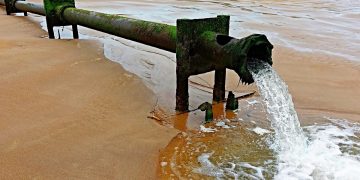
One such issue is the dumping of sewage and other waste. Cruise ships are essentially floating towns – Euribia, for instance, has capacity for over 6,000 passengers and almost 2,000 crew. While not a viable source of fuel, this nevertheless generates plenty of waste. The ships typically collect their ‘black water’ (sewage) in treatment tanks, where it’s filtered and then disinfected to varying extent. It’s then dumped into the sea, in accordance with regulations under maritime law.
Ostensibly this seems fair enough – there’s no perfect way of discharging effluent, after all. However, some treatment systems are better than others, and illegal dumping is not uncommon. This raises concerns about the impact of pollution on coastal ecosystems, especially those cruise routes heavily concentrated around tropical coral reefs in the Atlantic. While MSC Euribia has the most advanced sewage and wastewater treatment systems, around a third of MSC Cruises’ ships don’t.
Another major issue is the sheer size of these monstrosities – modern cruise liners make the Titanic, a ship named for its enormity, look like a dinghy. These motorised islands require deep channels to access coastal ports. This involves dredging stretches of coastline specifically to accommodate them, which ravages seabed habitats.
But what really makes MSC Euribia’s greenwashing sting is its ownership. MSC Cruises is a subsidiary of the Mediterranean Shipping Company, which recently climbed into the top 10 industrial emitters in Europe. MSC was founded in 1970 by Gianluigi Aponte and his wife Rafaela, who each own a 50 per cent stake in the company.
After benefitting from skyrocketing shipping costs during the COVID-19 pandemic, they’re estimated to be worth over $30 billion apiece, placing both firmly among the 50 richest people in the world.
Research shows that – regardless of personal motivations or self-perceptions – the richer people become, the higher their consumption and associated environmental impacts. Since 1990, the richest one per cent globally have produced more than double the cumulative CO2 emissions of the poorest half of humanity.
Among the major contributors to the astronomical carbon footprint of billionaires is owning superyachts, which average about 7,000tCO2 a year. Aponte owns a custom-built superyacht reportedly valued at $35 million, with annual running costs of $3m. While his wealth gives him a carbon footprint greater than that of many countries, he sells a story about ‘sustainable cruising’ that’s literally based on bullshit.
It’s unlikely that there’s any such thing as a sustainable cruise. They’re usually carbon intensive, notwithstanding Euribia’s biogas fuel, and aside from the emissions of the ships themselves, often involve air travel to get passengers to and from ports of embarkation and disembarkation.
The entire tourism sector, with its continuing emissions growth, must face a reckoning in the coming years, rapidly shifting away from aviation and cruises, and towards a greater focus on domestic tourism, public transport infrastructure and emphasising high-value, less frequent trips with longer stays rather than a growth model based on ever higher volumes of tourists.
In the meantime, we can do without billionaire shipping magnates covering us with greenwash and telling us it’s raining.

CLICK HERE TO DONATE TO OUR CROWDFUNDER
HELP US BECOME STRONGER SO THAT WE CAN CONTINUE TO DELIVER POWERFUL CITIZEN JOURNALISM!