In the span of less than fifty years – a single human lifetime – humanity has transformed the way it lives. We have shrunk the world into screens that fit in our pockets. We summon food, information, entertainment and connection at the touch of a finger. Tasks that once demanded time, patience and effort are now completed in seconds. By almost every conventional measure, life has become easier.
And yet, something is not sitting right.
Despite unprecedented technological capability, we are more anxious, more stressed and more disconnected than ever before. We move faster, but feel less grounded. We communicate constantly, but often without depth. The promise of ease has not delivered peace. Instead, it has left many feeling overwhelmed, restless and quietly uncertain about the future.
We are told this is progress, but towards what?
Technology has not only changed how we live – it has reshaped how we think about our place in the world. We increasingly behave as though nature is something external, something to be managed, engineered or overridden. We predict the weather, redesign landscapes, manipulate life at a genetic level and extract resources at astonishing speed. This has created a powerful illusion: that humanity is finally in charge.
If something goes wrong, we assume innovation will fix it. If a system breaks, we upgrade it. But nature is not software. It cannot simply be patched or rebooted. Ecosystems are not machines; they are living, interdependent networks formed over millions of years. When we interfere without restraint or humility, the consequences do not remain contained. They cascade.

Every day, headlines warn us of environmental collapse: climate change, deforestation, polluted oceans, disappearing species. We are repeatedly told that “the planet needs saving.” But this language lets us off too easily. The planet does not need us. Earth has endured ice ages, asteroid impacts and mass extinctions long before humanity arrived – and it will endure long after we are gone.
What is truly at risk is our ability to live here.
We are dismantling the very systems that keep us alive: stable climates, fertile soil, clean water, biodiversity. This is not an abstract future threat – it is a slow unravelling already underway. When forests fall, oceans warm and species vanish, the damage does not stay neatly within environmental columns. It reaches into food security, health, migration and conflict. Environmental destruction is not separate from human suffering; it is one of its greatest drivers.
Perhaps the clearest warning sign is the accelerating extinction of species. Plants and animals are disappearing at a rate unmatched in modern history, often erased to make room for short-term economic gain. Each loss weakens ecosystems that regulate the air we breathe, the food we grow and the water we drink. But beyond the practical consequences lies a deeper moral reckoning: what gives us the right to decide which forms of life are expendable?
We speak of innovation while silencing birdsong. We praise efficiency while emptying oceans. And we tell ourselves that technology will somehow replace what we destroy.
This faith in technology borders on belief. Renewable energy, artificial intelligence, carbon capture and geoengineering are frequently presented as salvation. These tools matter – they may even be essential. But they are not replacements for forests, coral reefs or intact ecosystems. They are supports, not substitutes. No invention can replicate the complexity of a living world once it has been broken.
At the same time, a quieter crisis unfolds – one that mirrors the environmental one. As we distance ourselves from nature, we distance ourselves from something deeply human. Many people now live lives almost entirely indoors, under artificial light, detached from seasons, soil and silence. We rarely look at the night sky. We no longer know where our food comes from. Our days are shaped more by notifications than by natural rhythms.
This disconnection carries a psychological cost. Study after study shows that time in nature reduces anxiety, improves mental health and restores a sense of belonging. Perhaps this is no coincidence. Human beings evolved within ecosystems, not apart from them. When we sever that relationship, something essential is lost. The mental health crisis and the environmental crisis may be two expressions of the same wound.
What happens if we don’t stop?
There is a temptation to believe that even if we continue on our current path, humanity will somehow adapt – that we have always found a way before, and therefore always will. History and ecology, however, tell a more sobering story. Civilisations rarely collapse because of a single catastrophe. They collapse because they expand beyond the limits of their environment and fail to adjust in time.
Ecologists describe this condition as “overshoot”: consuming more resources than the Earth can replenish. In the natural world, overshoot is always followed by correction. That correction is not ideological or moral – it is biological. When food systems falter, populations decline. When water becomes scarce, conflict intensifies. When climate instability disrupts agriculture, disease and displacement follow. Humanity is not exempt from these laws; we have merely delayed their consequences through technology.
If expansion continues unchecked, the most likely outcome is not extinction, but contraction. Human numbers would fall – unevenly and painfully – through famine, conflict, collapsing health systems and declining birth rates. The poorest and most vulnerable would suffer first. Wealthier societies might buffer themselves temporarily, but no nation exists independently of a destabilised planet.

Crucially, collapse would not begin with empty cities or sudden silence. It would begin quietly, as it already has, in the erosion of mental health, trust and hope. When people stop believing the future will be liveable, they stop investing in it. Falling birth rates across many industrialised nations are often explained in economic terms, but they are also psychological signals – reflections of collective doubt about what kind of world children would inherit.
Humanity would likely survive such a contraction, but in far smaller numbers and under harsher conditions. Communities would become more localised. Life expectancy would shorten. Technological complexity would diminish as fragile supply chains fractured. It would be a simpler world, but not by choice – a forced return to limits imposed by ecological reality.
What makes this trajectory so unsettling is that it is not inevitable. Unlike past civilisations, we can see the warning signs in advance. We understand climate systems, biodiversity loss and ecological thresholds. Collapse becomes likely not because humans lack intelligence, but because modern culture struggles to accept limits in a world that equates growth with success.
Choosing a different measure of progress
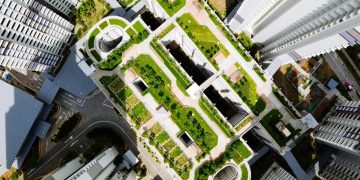
So where does this leave us? Must humanity choose between progress and preservation? The answer need not be so stark. A different path exists, but it requires a profound shift in values. Technology must serve regeneration rather than endless extraction. Economies must reward long-term resilience instead of short-term profit. Cities must be designed around human wellbeing and biodiversity, not just efficiency. Education must teach ecological literacy alongside ambition – responsibility alongside innovation.
Most importantly, we must redefine progress itself.
If progress is measured only by speed, growth and consumption, then it becomes a race towards collapse. True progress should be measured by the health of ecosystems, the stability of communities and the opportunities left for future generations. The real question is not how much we can take from the world, but how carefully we can live within it.
We are standing at a crossroads. The same intelligence that built extraordinary machines has pushed the natural world to its limits. Whether that intelligence becomes our undoing or our redemption depends on the choices we make now. Future generations will not only inherit our technology – they will inherit our air, our oceans, our soil, or the absence of them.
Sustainability is not about inventing a new world. It is about remembering an ancient truth: humanity is not separate from nature, but part of it. And if we fail to protect the systems that sustain life, no amount of innovation will save us from ourselves.
The future is still unwritten. But history will remember whether we chose dominance over balance, convenience over care, or speed over wisdom. The question remains: will we leave behind a world that merely served us – or one that allowed life, in all its forms, to endure?
CLICK HERE TO DONATE TO OUR CROWDFUNDER
HELP US BECOME STRONGER SO THAT WE CAN CONTINUE TO DELIVER POWERFUL CITIZEN JOURNALISM!