


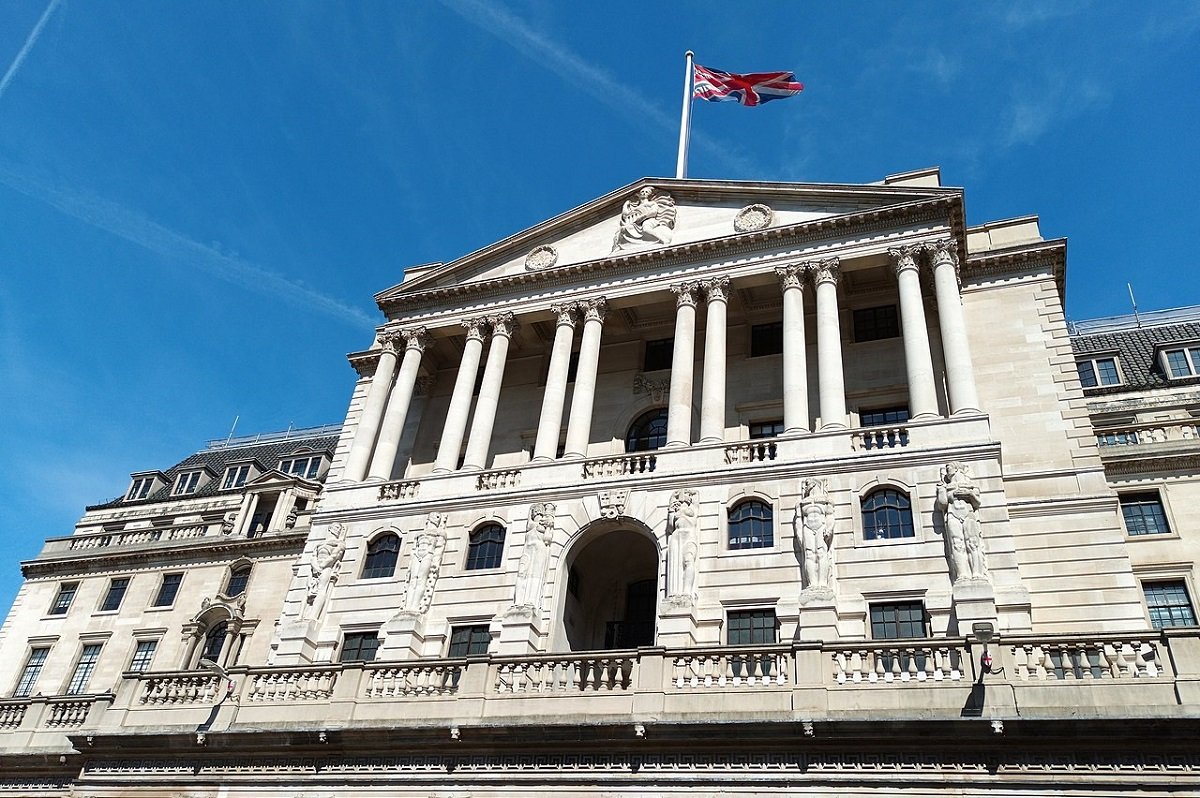
To measure inflation, the Bank of England uses the Consumer Price Index (CPI). This meticulously assesses the cost of a range of items, including chocolate biscuits but surprisingly, not the cost of housing. When it attempts to reduce inflation by raising interest rates, it hopes that this will reduce demand for chocolate biscuits.
The Bank is probably correct, since raising interest rates increases the cost of mortgages and indirectly rents. So that, for many people, the Bank is increasing the rate of inflation. However, people paying more for their mortgages have less money to buy chocolate biscuits, so that the demand for chocolate biscuits, and hence the price, should go down – i.e. lowering CPI by increasing other inflation.
Raising interest rates: a solution that fuels inflation?
Raising interest rates to combat inflation has other consequences.
When the Bank raises interest rates, people are relatively better off if they have money to spare and keep it in savings accounts. Those who need to borrow do not have money to spare and are worse off. A perfect driver of inequality.
Perhaps the Bank hopes that higher interest rates mean that, as someone with savings, I will be tempted to put more money aside, and buy fewer chocolate biscuits. But it seems perverse for the Bank to believe that helping those already with freedom to buy as many chocolate biscuits as they like will have the greatest effect on future chocolate biscuit consumption.
Inflation also occurs when there is a disruption in supply. For instance, chocolate prices have risen, in part as a result of disease in cocoa plants (although I have a degree in Botany, I never heard that raising interest rates could combat plant disease).
More seriously, the same argument applies to larger scale supply side disruption. The UK imports nearly 40% of its food and 40% of its energy. Demand for these essentials is going to be relatively inelastic. If they cost more, we just have to pay more.
A simple proposition
Proponents of Modern Monetary Theory can be a bit strange on imports and exports, but I suggest a simple proposition:
To import food or energy, the UK needs to exchange £s for other currencies, for instance $s. However, there needs to be a reason for holders of $s to want to exchange these for £s.
The best reason would be if $ holders wanted to buy goods and services priced in £s. More exports should make it easier for us to buy the $s we need.
When the Bank of England raises interest rates, however, it creates a less desirable reason to buy £s. It may make the return on £-based bonds more attractive than the return on $-based equivalents. In the short run, overseas investors will buy more £s, the £ will increase in value, the import of essential items will become cheaper, and inflation will come down.
So far so good, but eventually overseas investors will want to convert the interest on their investments and the investments themselves back into $s. Extra £s will need to be exchanged back to $s and the exchange rate will weaken. Worse, higher interest rates will make it harder for UK exporters to borrow so that they can make the new investment they need to remain competitive.
A final worry. When the Bank of England causes mortgage rates to rise, more and more mortgages default and more and more homes are repossessed. This is re-creating the very conditions that led to the banking crash of 2008.
Thus when the Bank of England raises interest rates, there are a number of harmful side-effects. But does raising interest rates actually affect inflation at all, or is the whole idea based on misuse of statistics?
Debunking the link between interest rates and inflation
I have suggested that when the Bank of England raises interest rates in response to inflation, it causes a lot of harm – but how good is the evidence that it even achieves its purpose?
The flaw in the dogma that raising interest rates will reduce inflation is that it mistakes cause and effect. This has been best explained by the heterodox economist, Blair Fix.
When inflation rises, interest rates and wages are likely to increase, to try to keep pace. It is entirely plausible that higher inflation causes higher interest rates and higher wage increases. But what if the rate of inflation is cyclical? If inflation rises rapidly because of a particular event, then it may pause to catch breath after the event has passed (rather like me at Parkrun if I go too fast). So if inflation is higher than average for a period, then it is quite likely to be lower than average for the next period. In other words, inflation is expected to rise and fall naturally.
When orthodox economists plot interest rates versus inflation a year later, they find that inflation has generally gone down. This convinces them that increasing interest rates has reduced inflation. But if higher inflation causes the higher interest rates and if inflation is likely to fall anyway, the correlation they see is real but meaningless.
Statistical misinterpretations: from wage growth to CO2 emissions
Fix showed this in a humorous way, by plotting wage growth versus inflation. As one would expect, a period of higher inflation was associated with higher wage growth and higher inflation was followed by lower inflation. But when he plotted the data showing a strong correlation between higher wage growth and subsequent low inflation, other economists simply laughed. He then took the same numbers and falsely labelled them as showing interest rates rather than wage growth. Economists then happily accepted it as clear evidence that increasing interest rates will reduce inflation.
Fix has given another example, with global warming:
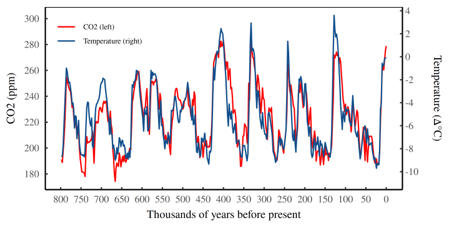
By analysing deep core samples from the Antarctic ice sheet, it is possible to estimate changes in global temperatures and CO2 levels over the past 800,000 years. Both have fluctuated greatly over that period, but show an almost perfect correlation. When CO2 levels have risen, global temperatures have risen. To a climatologist this makes perfect sense, but to an orthodox economist, it proves that CO2 reduces global temperatures. If you look at the periods following high CO2 levels, you see that global temperatures have fallen – so that increasing fossil fuel emissions should reduce global warming. Crazy, but exactly this logic is used by the Bank of England to justify high interest rates.
A mortality analogy: lessons on misreading data
I have also done a little test, using UK mortality figures.
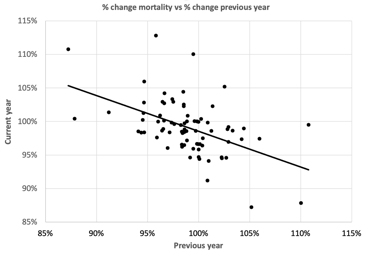
If more people die this year, then fewer people are likely to die next year (you don’t die twice). If you look at the increase or decrease in the death rate one year with the increase or decrease the next year, you find that this is indeed the case. The negative correlation is highly significant (P<1/100,000).
If an orthodox economist took this correlation and looked at something associated with deaths (say the purchase of funeral wreaths) they might predict that if we buy excess funeral wreaths in 2024, it will save lives in 2025.
Quite absurd, but Labour, Conservatives and the Bank of England all derive their economic policies from this logic.

CLICK HERE TO DONATE TO OUR CROWDFUNDER
HELP US BECOME STRONGER SO THAT WE CAN CONTINUE TO DELIVER POWERFUL CITIZEN JOURNALISM!







