


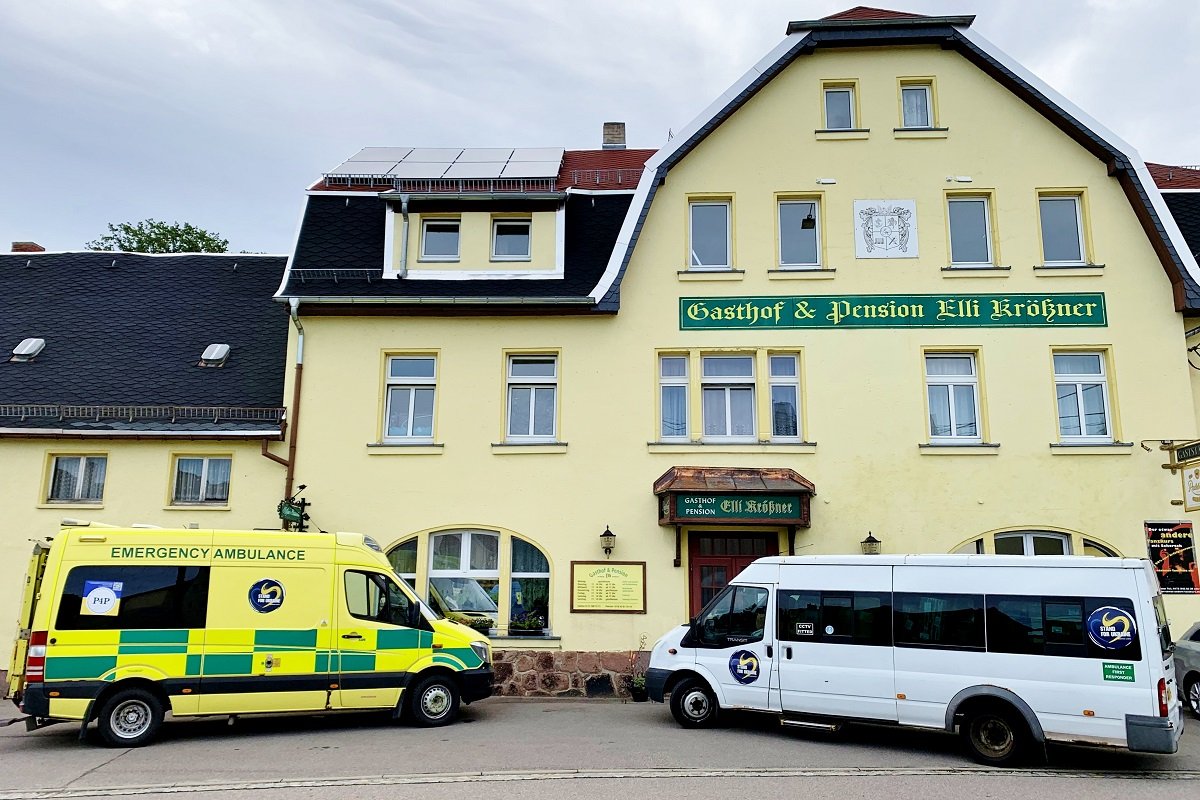
On Friday 13 September, Clarkson, Hammond and May released their final journey together after 22 years producing some of the most impactful automotive television in British history. On that same day, 1,500 miles away from the UK’s shores an ambulance called Amy and a bus called Bob – along with their drivers – were embarking on the final stage of their own journey, one which would take them into war.
I refer to Ukraine, a country which continues to push back against Russia daily despite threats of obliteration not just of its soldiers, but its civilians too. Since my first visit to Ukraine in April with James Bonallack, Stand For Ukraine’s Iryna Olyanovska, Chris M, Eric Reed and Pick-ups For Peace had been working on how to get an ambulance to the people of Kharkiv, a city which sits less than 40 miles from the Russian soldiers intent on its capture.
As the deadline neared, a second vehicle, a Ford Transit bus, was purchased for £500 and named Bob. By mid-September a most unlikely sextet set off from Brighton in a wave of water, diesel, and purpose.
As we drove to Dover, I genuinely wondered if – despite its statistical unlikelihood – I was driving away to die. Unlike other members of our team, I have no military training. I have a degree in War Studies and History, but the closest I’ve been to a bullet flying at my head is a firework exploding near me when I covered a pro-Palestine protest. The realisation that I was going to be in a city where it would be ballistic missiles and drones falling rather than a £5 firework was slightly unnerving.
In the UK, all we have seen of Ukraine for many months is news of the impact of war – so inevitably my feelings about being there would be a little skewed. While the reality was likely to be less terrifying than my anxiety was suggesting, fellow members of the convoy agreed there was no issue with staying in Kyiv, despite possible drone and missile attacks, for those uncomfortable following Amy and Bob to Kharkiv.
A three day journey to Ukraine
Apart from a freezing cold wait at Dover, our journey was not especially uncomfortable, spending most of our time at 62mph on the motorways linking France, Belgium, Holland, Germany and Poland, in vans with heaters and comfy chairs. Also, it was hard to be frightened when I was in the company of two ex-members of the military and someone who works in the media and liked talking about cars.
We got off the ferry at 3am on 11 September and powered through France, Belgium and most of Germany before settling in a small town south of Leipzig. We’d had to adjust our plans because of far-right sympathisers in the city who were anti-Ukraine and thus we could not risk the safety of us or Amy and Bob. Setting off on the 12th, we drove through the rest of Germany, through some incredibly sticky traffic and across to a town near Poland’s border with Ukraine. The further east we drove, the fewer cars there were. SUVs, estates and hatchbacks gave way to lorries, Humvees, and by the end, no traffic at all.
Twenty miles out from our hotel, the only cars passing us had Ukraine registration plates and the only people ahead of James and me in Amy were Chris M and Eric on board Bob. Soon the likes of Lviv and other Ukrainian place names accompanied Polish ones as pits of darkness bookended stretches of streetlamps as the night closed in.
Friday the 13th welcomed us with morning mist, but we made it to the border, into Ukraine and onto roads that were, for the most part, better than those in the UK. Obviously, there were patches where the road was ripped apart, but the main roads between the border and Kyiv had far fewer lumps and bumps than similar highways at home. One stretch was so straight I don’t think we moved the steering wheel for a solid five minutes, later discovering it had been modified to be used as a back-up runway.
Getting to Kharkiv
Driving into Kyiv, James and I sensed we were entering the unknown. Neither of us had been this far and what we’d seen in two years of coverage of the war weighed on us. Yet, sitting in rush hour traffic, we watched as Kyivians went out to dinner and locals in tuned cars revved their engines. There may have been a midnight curfew, but as in Lviv, this was a city that was not going to let Russia’s threat stop its people from living as the restaurants did a roaring trade and people enjoyed their evenings.
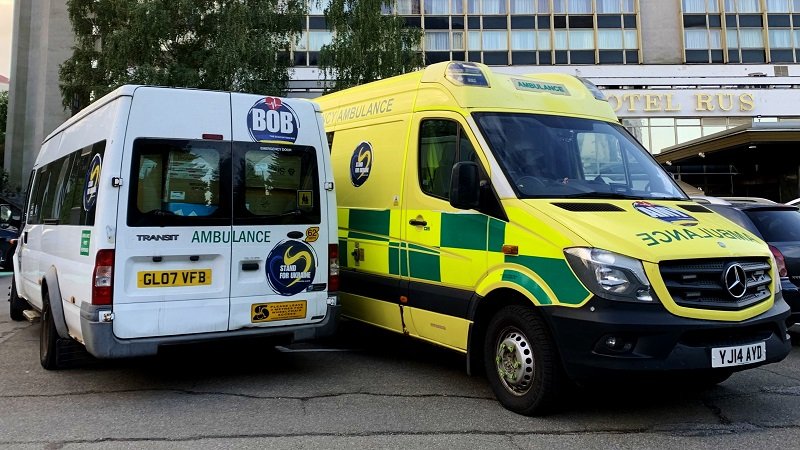
The next day and Amy and Bob set off for Kharkiv with Eric and Chris at the helm. James and I stayed behind, meeting up with them both as their train passed through two days later en route to Poland. Much to our relief, Amy and Bob made it the final few hundred miles to Kharkiv.
To our astonishment, we later learned that Amy was put into service within 24 hours of her arrival and had been, at one point, the only ambulance available to attend a building struck by Russian munitions. Early proof of how valuable and needed she and Bob had been.
Not just ambulances are needed
It was for this reason, the protection of and service to the civilian population, that all four of us had given up a week of our time, to help civilians living under 40 miles from Russian forces and facing regular power cuts as well as bullets and bombs. Amy and Bob were sent to serve, secure, and save and they did all three within a week of their wheels touching Ukrainian tarmac.
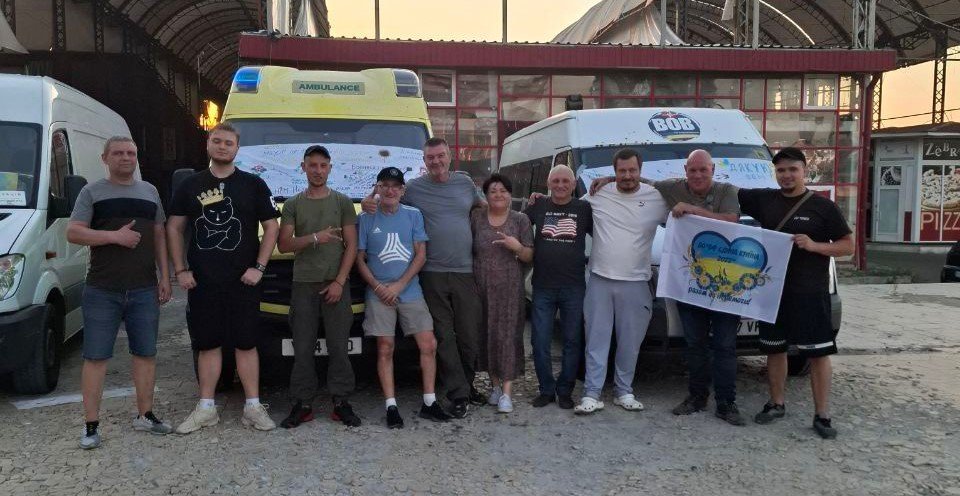
Whilst it will be the military and soldiers who ultimately fight this war, it’s not just tanks and APVs (Armoured Personnel Carriers) that Ukraine needs. It needs ambulances, it needs buses, it needs vans, and it needs pick-ups in Kyiv and beyond in cities like Kharkiv, Sumy, Odessa and Poltava and the towns surrounding them. This is why every vehicle, be it a tank or a Toyota, an APV or an Isuzu, is valuable in this decade-defining conflict.
For more information about how you can help Ukraine through Pick-ups For Peace or Stand For Ukraine Brighton and Hove, see the links below:
Pick-ups For Peace
Stand For Ukraine Brighton and Hove

CLICK HERE TO DONATE TO OUR CROWDFUNDER
HELP US BECOME STRONGER SO THAT WE CAN CONTINUE TO DELIVER POWERFUL CITIZEN JOURNALISM!




