


Ten years on
Dear Editor
Ten years ago Europe was gripped by the plight of the people of Syria as they sought refuge from dreadful civil war. People of goodwill throughout the continent, including Sussex, swung into action to provide what they could for those finding their way to a welcome, while the lies-filled campaign to extricate this country from the EU used this example to pretend that millions more would be following from Turkey.
Ten years later we are seeing our nation again being fed racist lies to demonise those who have or seek sanctuary here. Much of the hatred directed at them is gratuitously fed by media and political figures to a receptive minority, to be regurgitated as if they were affected, just as happened in 2016. This time there is little pretence that racism is not the motive. The only progress in this narrative is that there are writers and publishers ready to say so and still more people of goodwill supporting the desperate.
Tom Serpell, East Hoathly
2 October 2025
Reform UK’s threat to human rights
Dear Editor,
Thank you for publishing Janice Heppenstall’s excellent article ‘Reform UK intends to withdraw our human rights’. As she points out, many UK citizens are ignorant about the importance of the European Convention on Human Rights (ECHR) in protecting everyone’s rights.
Nigel Farage’s appalling rhetoric about asylum seekers must be challenged. So far, the Labour government’s policies on immigration have looked far too close to Reform UK’s and have been in danger of legitimising this negative misinformation.
I am particularly alarmed by the intervention – financially and in person – of the American far right, as we saw in Elon Musk’s recent inflammatory speech at the Tommy Robinson rally in London.
PM Starmer is only belatedly beginning to counter the division and hatred fuelled by the far right and he needs to go much further in opposing such horrendous views. His government must denounce Farage’s lies and start spelling out the benefits that migrants bring to the UK. As Janice Heppenstall’s article makes clear, Reform UK poses a very real threat to all our human rights if their advance is not checked.
Viv Griffiths
Brighton
2 September 2025
Banned from the Amex stadium
Dear Editor
I am writing to congratulate James Joughin, the author of the clever, witty and thoughtful article about the banning of Roger Wade.
After hearing about the story I looked it up and was directed to your website.
Although I try and read widely it isn’t often that I have come across the quality that is evident in your article.
I apologize for not having come across Sussex Bylines before. It is not the most widely read site here in New Zealand.
John Rothery,Tauranga 😎
(I have just returned home to New Zealand having spent 5 enjoyable, despite the potholes, weeks in England.)
2 September 2025
The search for a large ‘flat white’!
Dear Editor
I have had cause to visit England twice in less than 12 months because of my sister Maggs. The first time was in November last year for her 70th birthday, this time it was for her wedding.
OK. I will get to the point.
Other than sport here in New Zealand, one of the most important things in life is good quality coffee. My tipple is a large oat flat white. For that I bring a keep cup – more than anything else it keeps it warm, otherwise you have to drink it all at once.
My problem is that there is an unwritten rule in England that you cannot get a large flat white. Large latte, no problem. But large flat white – “sorry sir we can’t do that”. The nearest that I have got to an explanation was given to me in Banbury – “it would be too strong for you sir”. 
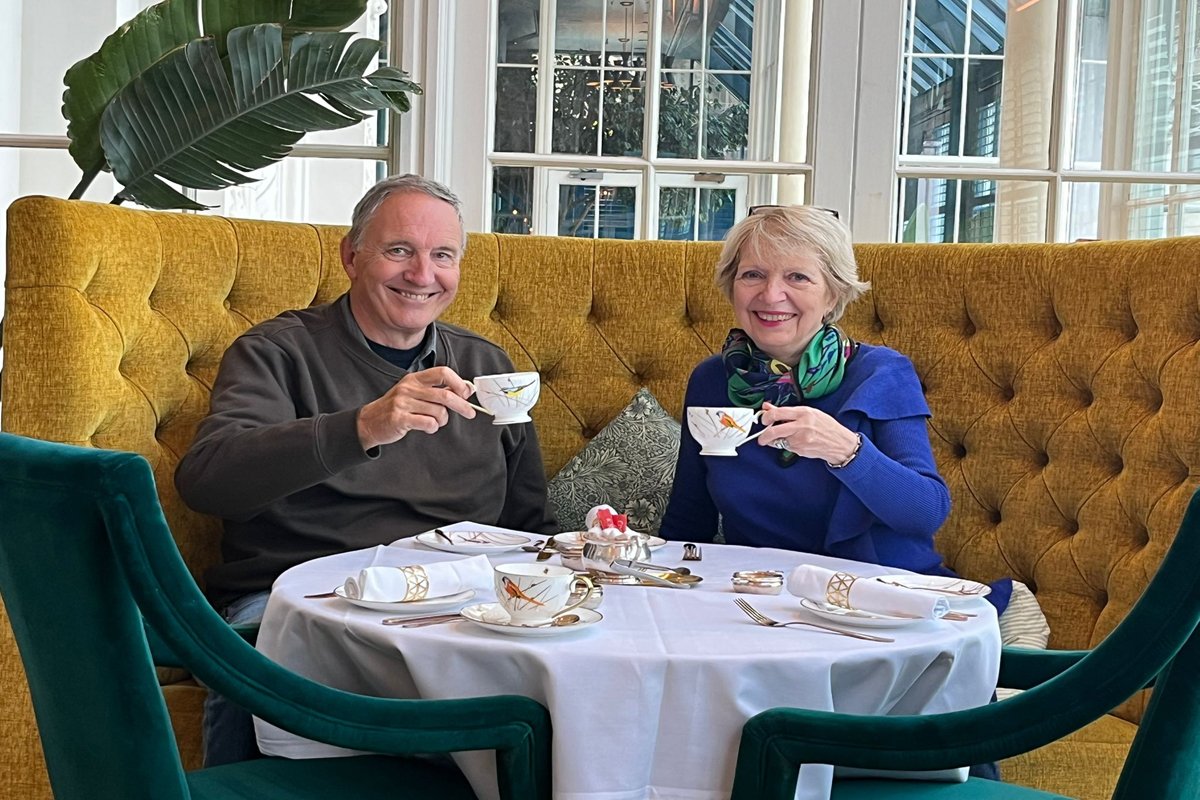
But Brighton has a venue that supplies, not just an acceptable cup of coffee, but also a large flat white. I feel wary of stating it’s name in case it should be raided afterwards. But the IRA didn’t manage to put it out of business, so I doubt that it’s breaking of the ‘rules’ will do so either. I am talking of course of the Grand Hotel in Brighton. Good coffee. Nice cakes. Excellent service.
John Rothery
Local government reform
2 September 2025
Dear Editor
We needed reform of local government finance not fiddling around with local government boundaries!
Do we need local government reorganisation with all this debt around?
Councils in East Sussex hold debts of almost £600 million, reports the Argus and the BBC:
The Labour Government is involved in an exercise akin to – rearranging the deck chairs on the Titanic when the ship is sinking. It is an organisational reshuffle without reform – structural changes that don’t tackle underlying issues.
It’s like an episode from the BBC’s Yes Minister, but it doesn’t just waste the time in the Ministry of Administrative Affairs – it is wasting the time of all the country’s councils and thousands of councillors.
What is worse is that government ministers didn’t review the cost of the reorganisation. In a recent BBC report it is revealed that the Government did not do its own analysis of the cost of the biggest reorganisation of councils in England for decades!
What is needed is the reform of local government finance. For years local councils have had to put the begging bowl out to the Government on numerous ‘single issues’ from potholes to social care, to name just two. There is no government strategy for financing local authorities and Angela Rayner’s (Deputy Prime Minister) local government reorganisation, misguidedly called ‘devolution’, isn’t going to improve the situation. It’s the cart before the horse. There needs to be a strategy for local government finance rather than reorganising council areas on a map!
For years the Government has ignored the underlying issue – they have been reactive – moving from financial crisis to financial crisis while services get worse.
I believe it’s not too late to cancel this reorganisation and stop the car crash.
Vic Ient
UK government must restore ODA spending
29 August 2025
Dear Editor
In February 2025, the UK government announced plans to cut Official Development Assistance (ODA) from 0.5% to just 0.3% of Gross National Income by 2027, to boost defence spending. What may seem like a small cut will, in reality, have devastating consequences for the world’s poorest communities while also undermining the UK’s long-term security. As a Political Affairs Intern with The Borgen Project, an international non-profit organisation, working to make global poverty a foreign policy priority, I have seen first-hand the importance of aid.
Increasing defence spending may seem logical in an era of heightened global conflict. Yet preventing conflict through aid is far cheaper than dealing with the aftermath of war: every $1 invested in development can save up to $103 in future conflict-related costs. Crucially, aid addresses the root causes of instability, not just the symptoms. By tackling poverty, corruption, and lack of opportunity, it confronts the conditions that fuel extremism and irregular migration, ultimately making Britain and the world more secure.
The UK was once a world leader in international development, meeting the legally enshrined 0.7% target and inspiring other nations to follow suit. Scaling back now not only risks humanitarian setbacks but also weakens our moral authority on the world stage.
I urge the government to reverse these cuts and restore ODA funding. Aid is not charity; it is a strategic investment in stability, security, and the values Britain has long championed.
Sana Mohammed
Borgen Project Ambassador
Thoughts after using AI
30 July 2025
As a home-based student of political history, I access sources however I can from a rural desk. I recently obtained and read with great interest two hefty tomes on the ascent of Josip Broz Tito, the post-war leader of Yugoslavia. Needing to fill in some gaps and with a general preference for books I acquired an AI-generated volume on the topic – a first for me. This served its purpose at least in part but led me to conclude that my role as a writer need not feel too threatened yet.
It is clear from what I could glean that its method is to scour such sources as it could find online without logins [which protect the most interesting sources] and to “precis” its findings. This apparently can be achieved in minutes, which is impressive. Actually the writing – style, grammar, flow etc – was not at all bad. The content was clearly constrained by the limits to its reach and lack of understanding of my own specific interest, which could probably be overcome by better briefing. But the repetition! I should think that properly edited, such as we enjoy in Sussex Bylines, it could have been shorter by at least 50% without loss of value. It may only take AI seconds to do what it does but doubling the reading time by continual repetitions is quite negative for the reader.
I had already become more than a little annoyed with the intrusion of chatGTP into my researches and even with interference in my writing, at which I hope I am better. This example of AI as a potential replacement for me and my fellow writers does not worry me. One of the pleasures for me in writing lies in the process of research, sourcing, ordering, re-ordering and polishing the content of articles. This may be slow but it allows both original thought and some consideration for the reader which my early experience of non-human contributions clearly lacks. Long may Bylines stay human.
Tom Serpell
Ukraine’s choice: territories in exchange for peace and prosperity
19 June 2025
Dear Editor
Another debate about possible terms of ceasefire between Russia and Ukraine in the press explained the problem of Kyiv’s possible concessions for peace. Zelenskyy continues to resist Russia’s claims to the Ukrainian territories, whether legal or actual, and it’s unknown for how long he will stand by this position. Nevertheless, the balance of forces on the frontline and Kyiv’s resources tells us that the agreement on mutual territorial concessions with Russia will be signed sooner or later. Then a question arises – could the cessation of the hostilities be a huge catastrophe for Ukraine?
The experience of the “Easter truce” demonstrated that it will be almost impossible to avoid ceasefire violations without a clear demarcation line between the Russian and Ukrainian forces. Only a mutually signed agreement, securing certain territories for the parties of the conflict could lower significantly the amount of shelling, armed clashes, and civil casualties. This could be a crucial factor for the return of several millions of Ukrainian refugees back to Ukraine. It is worth noting that after the annexation of Crimea in 2014 and the cessation of the hostilities in the Donbas region, Ukrainians could travel peacefully through the disputed territories. There probably would be such an opportunity again in the case of a long ceasefire.
The problem of the reconstruction of the war-affected regions would be of the highest importance as well. Most of Kyiv’s international partners are waiting for the end of the war’s active phase to start implementing announced projects. Renovation of infrastructure and modernization of Ukrainian cities should have a good impact on socio-cultural situation in Ukraine, and it’s in Zelenskyy’s interest to make hostilities stop in the near future before the investors change their mind. A current frontline still makes an implementation of their plans possible.
A compromise on the conditions of a possible truce would let Ukraine demobilize and fully rotate its troops and to fulfil all financial and social obligations to soldiers and their families as well. Prolongation of this process leads to a growth of internal discontent, and, consequently, an increase in the popularity of the opposition forces, including pro-Trump ones, who have long been eager to call a truce which attracts to their side the electorate who is tired of the war. As a result, not only Zelenskyy’s approval rating is struggling, but also the whole European integration strategy is under the threat. If we’re talking about Ukraine’s contribution to pan-European security provision, the truce is more preferable than the continuation of the war. Kyiv would be able to save its command staff and combat ready brigades for handing over their unique experience to their European allies.
Defending their territorial integrity is a supersensitive topic for Ukrainian society. Nevertheless, on the other side of the scales, economic and military potential are saved, coping with the demographic catastrophe of war is mitigated and the renovation of infrastructure is enabled. This along with investment and European integration will be important for saving sovereignty and overseas credibility for Ukraine. Despite Zelenskyy’s popular appeal and categorical opposition, the choice between all these things and ashes of territories controlled by Russia is obvious for common Ukrainians.
Yuri Mirovich
Yuri Mirovich is a Ukrainian refugee, living in the Netherlands since 2023 and studying law at the University of Groningen. While living in Ukraine he was engaged in active public work and is nowa member of the Dutch political initiative De Beweging. This letter reflects his opinion on whether the loss of territories, following a peace settlement would be a disaster for Ukraine.
Trump and Zelensky
7 March 2025
Dear Editor
I was defending Zelensky’s interactions with Trump and Vance, in the disastrous meeting in the Oval Office, to a friend at the weekend and felt that it was worth laying out my arguments in a letter to Sussex Bylines.
I agree one could always say that Zelensky could have played it better. But after three years of war and probably many sleepless nights and constant appearances to bolster Ukraine’s position I’m not surprised that he may falter at times. I saw him sitting on the edge of his seat leaning forward. This is a sign of heightened stress. But I admire him because he wasn’t going to be bullied into accepting a deal which would be bad for Ukraine. I would also say that he didn’t shout which J D Vance did. He tried to get over his point and he was shouted down by Vance.
The other question one might ask is – did he know that J D Vance was going to be in the room? Keir Starmer and Macron both saw the US president on their own – it’s normal that visiting presidents hold the public meetings without any other people speaking.
This is how the BBC’s International Editor, Jeremy Bowen summed things up on the BBC Radio Four Today programme: “There are suspicions now that the public row was, in the words of one diplomatic observer, a planned political mugging either to force president Zelensky to do America’s bidding or to precipitate a crisis that would allow them to blame him for whatever happens next if Mr Tump follows the breakdown of talks with a freeze on military aid.”
Some Democrats came out strongly in support of President Zelensky. Nancy Pelosi, wrote on X “Putin must be overjoyed with today’s theatrics,” and Senate Minority Whip, Dick Durbin, claimed the Ukrainian president is owed an apology, noting, “Ukrainians have fought tooth-and-nail on the frontlines of democracy against Russian aggression.” Personally, I was also appalled at the public rubbishing of Biden and his administration. There was no dignity in this. Trump got away without having to defend his very poor record on Ukraine when he was in office between 2016 and 2020. But the US spends billions on European security annually, contributing more to NATO’s defence than any other country and supporting individual nations. This is very worrying as Trump could turn off the tap not only to Ukraine, but to Europe at any time. Would he go that far? I wouldn’t put it past him.
Vic Ient
This letter was received before President Trump decided to pause support for Ukraine.
There is outrage amongst voters that council elections have been postponed but, in effect, cancelled not only in Sussex but across the Southern and Eastern counties of the UK, as illustrated by this letter from a Test Valley Borough and Parish Councillor in Hampshire to Sussex Bylines.
The demise of local democracy?
28 February 2025
Dear Editor
What comes to mind when we hear the term ‘democracy’? Do we live in a democratic society here in England? This month, I experienced a troubling reality: my right to vote was stripped away.
Like millions of others, I discovered that the government has decided to ‘postpone’ the May 2025 elections in Hampshire, cloaked in the rhetoric of local government reorganisation and vague promises of the ‘priority devolution programme’. Even the Chair of the Electoral Commission has expressed concern over this decision. The justification seems to centre on the supposed savings for taxpayers, as councils will have to prepare to elect new regional mayors next year – likely under the outdated First Past the Post (FPTP) system. I won’t even go there about the troubles of FPTP on this occasion.
The right to participate in regular elections is a cornerstone of a healthy democracy. When a government can cancel elections just like that without facing consequences, alarm bells should sound for everyone. Denying our democratic right to free elections signals a dangerous erosion of accountability and is fundamentally opposed to the principles of democracy.
The councillors who will remain in office come May will be occupying their positions without a true mandate. Rather than sitting, they will be squatting in the chambers. They will lack authority, legitimacy, and, fundamentally, the right to govern. Their terms were initially established during Boris Johnson’s premiership in 2021, and amidst the Covid pandemic. Many of these councillors would have been nearing retirement, having already stepped back and retired from their careers a long time ago.
It is unconscionable that the government, along with those who were facing electoral defeat in May, can strip away my voice and my right to influence change. As a woman, I am particularly reminded that it has been just over a century since women achieved the right to vote. Yet, here I am in 2025, unsure if or when elections will actually take place – there’s no certainty that they will happen in 2026 either, here in Hampshire.
Moreover, as we consider the implications for women and minority representation in local government, the future looks bleak. This is far removed from what devolution should truly be about. The formation of new unitary authorities often results in a 30-60% reduction in councillors compared to previous structures. Will this disproportionately impact women and minorities? The 2022 national census of local authority councillors reveals a troubling picture: 59% of councillors are male, 41% female, and a staggering 92% identify as white, with an average age of 60.
Given this landscape, it’s no surprise that trust in politics is at an all-time low, leaving many of us feeling disenfranchised and powerless. If you are fortunate enough to have local elections in May, seize the opportunity. You may not know when that chance will come again. Words I thought I would never hear in a democracy.
Sally Yalden
Parish and Borough Councillor Test Valley, Hampshire
Appeasement is back
2 December 2024
Dear Editor
Appeasement seems to be back. This word, most usually associated with the 1930s as political leaders were torn over how to avoid another dreadful war, seems appropriate once more today. Neville Chamberlain’s legacy was defined by his faith in Hitler’s promises. Now, our current government looks similarly credulous in refusing to condemn Israel’s violence or to protect the people of Palestine and now Lebanon.
Putin found encouragement from the West’s indecision over Crimea in 2014 and a more terrible war has followed, surely as a consequence. Now, Netanyahu follows suit with even greater brutality towards millions of innocent people in Lebanon, Gaza and the West Bank, including thousands of children.
Britain has for over a year given overt support to the government of Israel in its response to the killing of 1,200 civilians by a Hamas terrorist gang on October 7, 2023. Prime Minister Starmer has failed to condemn the subsequent disproportionate violence or the destruction of thousands of homes, schools and hospitals in Gaza. Tens of thousands have been slaughtered or rendered homeless by an uncontrolled State, at odds with many of UK’s allies and even the U.N itself.
He appeases aggression by one of the most formidable armed forces in the world against largely unarmed people, justified as self-defence against armed gangs living among them, which appears to ignore the right of self-defence of the Palestinian and Lebanese people and their human rights. Mouthing concern for casualties means nothing without action. Starmer has no parliamentary mandate for his one-sided stance nor for supporting the ethnic cleansing of Gaza.
In 1938/9 parliament held a lengthy and passionate but respectful debate on the issues of peace, appeasement and rearmament. Where is the democracy and statecraft in respect of the continuing Nelsonian eye towards the Palestinian and Lebanese people? Starmer has already paid an electoral price for “islamoblindness” in the loss of potential parliamentary seats and catalysing of a new party. What further consequences may flow from monocular support for Netanyahu only time will tell but the history of appeasement suggests that bullies and vicious autocrats must be challenged, not given a free pass. The Prime Minister is all too happy to maintain this position in relation to Putin but not, it seems, to Netanyahu; to support Ukrainians but not Palestinians. Why? [Editor note: since we received this letter the British government has signalled that it would abide by the provisions of the arrest warrants issued by the International Criminal Court for Benjamin Netanyahu and Yoav Gallant]
“The only thing necessary for the triumph of evil is for good men to do nothing” said political philosopher Edmund Burke. I believed Keir Starmer to be a good man but prejudice and appeasement seem already to be contributing to the triumph of evil on his watch, for surely the death and destruction of Palestinians, their communities and cultures is just that, as well as shaming to this country and surely not the legacy he would wish for.
Tom Serpell
Recent article by Tom Serpell
Letter to the Chancellor ahead of the Budget
21 October 2024
Removing the cap on the £2 bus fare – the impact on rural services in Sussex
Many users of public transport have been very pleased with the £2 flat rate bus fare, especially in rural areas.
I have it on good authority from one Sussex bus operator that the £2 fare cap has increased the numbers travelling by bus. This, in turn, has also helped the survival of rural bus services. I have also been told that if it was scrapped it is likely that the increased fares would considerably reduce the passenger numbers on the longer rural routes.
The impact on bus company finances would be serious, even though, according to the Daily Telegraph, the Treasury would benefit by £350m a year. For instance, in my area the single fare on the 166 bus from Lewes to Haywards Heath, where the Princess Royal Hospital is situated, would go up to £5.30 or £6.40. Additionaly, the new bus routes that have been introduced in East Sussex, as a result of the £2 fare, such as from Lewes to Hailsham, Heathfield and Eastbourne, would disappear.
It would seem to me that the countryside will suffer the worst. As ever, rural communities end up getting a raw deal. People without access to cars, the disabled, young people and the elderly need a decent transport service. It is no good saying that the aged and disabled get free bus passes. That’s fine if there is a bus route to their village or hamlet.
Cutting the £2 fare will mean the cancellation of many routes in rural areas. Also cutting out the £2 bus fare will force people who have started to use the bus instead of driving, to use their cars, leading to congested rural roads.
Getting more people on trains and buses is a key ingredient in cutting our CO2 emissions. It’s all very well for the government to talk about major projects like ‘carbon capture’ but why not avoid emitting the CO2 in the first place?
Furthermore, if the Government want to save £22 billion, they could start with supporting innovators and investors to achieve sustainable businesses and solutions for a ‘Net Zero Carbon’ future, where we are not polluting the atmosphere but building new green industries and services that are the pathway to an exciting and ‘climate safe future’. The Chancellor can invoke all sorts of fiscal measures, but without much improved productivity, the UK national debt will remain at record levels.
Please keep the £2 bus fare.
Vic Ient
Readers refute Ross McNally’s article on cats
11 March 2024
Dear Editor
What a load of rubbish. I have had lots of cats and never seen a dead rodent, bird or anything else on my doorstep or garden. Pets give a lot of affection and company to lots of people. And humans have a bigger impact on the natural environment.
Barbara Cook
Dear Editor
How many animals do we kill annually? Road kill, gun toting nutters shooting everything in sight. Meat for us to eat, pesticides on our crops that kill all insects, fishing etc. I could go on and on but that’s alright I suppose.
You tell me what we kill every year.
Paul Holmes
National need for housing not for East Sussex to solve
11 March 2024
Dear Editor
Residents of East Sussex weep. We read planning applications for one housing development after another, and consider what once was, and what is being lost: open fields, badgers, hedgehogs, songbirds, frogs, toads and newts. It’s devastating, and East Sussex is not alone.
We all know there is a housebuilding frenzy, in South East England, but across the UK. How many of these new homes go to families on the average national income? How much do these properties solve the problem of homelessness? The Guardian has started to highlight the issues with sub-par construction standards.
Stepping back: London property is used as a global reserve currency, pushing families further and further away from London zone 1/2. This problem needs to be tackled. The original problem, meeting a national need for housing, was never East Sussex’s issue per se to resolve: Westham, nor Stone Cross, nor Hailsham’s to resolve. Nor Polegate, Eastbourne, Heathfield, Uckfield. This is London’s housing crisis spilling over.
Local and County politicians could have chosen to resist the housing targets relentlessly, push housebuilding back to London and call for regulation and taxation of non-resident, overseas-resident buyers of London property which now stands empty. And owned by shell companies registered in tax havens. But they didn’t.
Local and County government could say that it just isn’t viable. Developers seem to have no qualms to say that ‘affordable housing’ makes their scheme unviable; water companies similarly have said that they can’t provide sufficient water supply or sewerage services. EA point out flood risk.
So why have our local and County politicians not similarly pushed back on targets which cause all of the above chaos, and more, and are predicated upon the assumption that London’s problems are going to be solved outside of London? They won’t: non-residential buyers will just keep coming from overseas to buy up properties for investment. London of course suffers as a result, and the demand needs to be taken out at the top. It’s a bubble.
London is in some sense big enough to resolve the problem in its own housing market. And in another, too weak. London residents and those of South East England need to find common cause. We need you as much as you need us. Those who want to live in London can stay for the work and cultural opportunities, but everyone needs to breathe and the countryside provides that within a short distance of London.
The planning system still exists as is for now, and citizens are opposing inappropriate development, where they can, at a local level. But the national policy framework needs reform, too.
Julie Bygraves
The True and Fair Party will do no more than split the anti-Tory vote
11 December 2023
Dear Editor
Thank you for the interesting profile of True and Fair Party candidate Jonathon Tod. He is no doubt a lovely guy and he seems to believe all the things that liberal types like us do. The True and Fair Party: how could anyone reasonably object? The problem is the country faces genuinely darkening times and the T&F Party’s whole approach is blurred by a refusal to think about both the long history of failed breakaway parties in this country and the growing urgency to establish some kind of progressive alliance to hold back the surging hard right tide.
If the voters of Fareham and Waterlooville want to defeat Suella Braverman, as Jonathon Tod claims they do, the last thing they should do is vote for him. Victory can only be achieved if the non-Tory parties in the constituency unite and agree to let one of them take the lead. We have enough problems with factions in the non-Tory alternative parties already without another one rising up to take a further bite out of the cake.
I would like to see Jonathan answer the charge that the T&F Party is essentially a vanity project and that if he and his colleagues really want to make a difference, they should be putting the shoulder to the wheel to construct the alliances that we all need. Gina Miller has many talents, not least getting important issues into the press, but none of this hoopla is necessary, rather it is a diversion that clouds the analysis that middle England will eventually have to come to terms with. Fair and True might try to say this is the complaint of the tired old parties (and I am not a member of any of them) but let’s be honest, Jonathon Tod has no more hope than the Monster Loonies. With the substantial anti-Tory swing that polls are now predicting, a non-Tory candidate could perhaps win this seat but the participation of TFP, and other attention seeking entities, could split the vote sufficiently to let Braverman in, and bring on the very horrors Tod says he is campaigning against.
We should remember what happened in France in the 1930s. As the inexorable rise of the right became ever more alarming, a temporary alliance of the centre and the left, in the form of the elected Popular Front government, held the line for a while. They may not have won the day but for a few crucial years they held back the rising tide. They carried out serious social and economic reforms that attacked the sources of discontent the right was feeding off. That time around, this was insufficient but as we stare down the barrel of another Trump presidency, and with Wilders, Le Pen and Putin all threatening to accelerate the democratic decay that is eating us from within, we need to get real and sharpen up our mechanisms of self-defence, both nationally and in our constituencies. Refusing to be diverted by the likes of Jonathon and Gina will be a first step.
As that well-known radical extremist, Vince Cable once said, in my hearing: “We must all hang together or most assuredly we will all hang separately.”
Yours cheerfully, James Joughin, Brighton
Taking issue with the dark side of bird feeders
9 May 2023
Dear Editor
The bird feeders article says how bad they are and suggests no alternative, other than a natural garden with no help added for the birds at all, with plants that may grow, or not.
So how then does that actually help if you can’t have seed producing plants, shrubs or trees, due to space or funds, without losing the little it may provide for ourselves to supplement the crisis? Pray tell. I am at a loss?
I do know that without help the starlings were once nearing extinction but thanks to feeding them ourselves, by way of buying it in, they are once again flourishing.
Is that ok to allow the total extinction of native dwellers? I know they go elsewhere but reside here also. Are you saying, “let wild birds die from starvation”, now that so many wild areas are being taken for urbanisation? No green belts are conserved enough to feed the entire population. Are they?
Patricia Jenner
Response to the Illegal Immigration Bill
Mother and daughter, Ginny and Sophie Foster texted each other at almost the same time yesterday, having just heard Suella Braverman’s announcement of her Illegal Immigration Bill, the irony of which title is surely not lost on anyone. They responded in a similar manner and decided to send them to Sussex Bylines as letters, which are published here in the hope that many others will have had the same reaction.
8 March 2023
Dear Editor
When Suella Braverman gets up in the House of Commons and talks about the “British people saying enough is enough” when it comes to small boats, it is jarring enough to make me doubt my own citizenship. Her wilful reduction of more than 67 million people to a singular, homogenous entity that all share the same hate think is not only galling, but speaks to how little we are represented here, if we don’t all subscribe to the opinion that migrants should be treated so egregiously.
As a member of the “law-abiding patriotic majority” who “see the country taken for a ride”, I can say that the only people doing that are the Home Secretary and her Government, who have shown that they are the ones prepared to ride roughshod over not only Parliamentary standards, but the laws they set and international law. Suella Braverman needs to stop taking the British people’s name so casually in vain.
Sophie Foster, London
Dear Editor
Suella Braverman has just spoken on my behalf in parliament stating that we, the British people, have seen the country taken for a ride. She was outlining her plan for preventing refugees from entering this country via small boats or another route that she deems to be illegal. As far as I am concerned, and I am sure I speak for many others, but would not presume to speak for the whole population as she does, the only people taking the country for a ride are those who, with her, are members of our cruel, corrupt and inept government. She does not speak for me nor does she speak for the millions who are indeed patient, compassionate and fair – happy to welcome refugees who wish to make their home here.
Ginny Foster, Lewes
Open letter to Paul Isaacs
This was originally published in Sussex World and Sussex Express, an open letter to Paul Isaacs. Managing Director, Generator Real Estate Solutions Ltd re the planning application for the demolition of the bus station.
14 September 2022
Dear Sir,
It looks very likely that the National Park will refuse the planning application for the demolition of the bus station in Lewes and its redevelopment by your organisation this Thursday. Despite this we understand you intend to go ahead with the closure of the bus station next week on the 16th of Sept.
Please would you hold off from this action?
If the site is closed off Lewes will be left without a bus station. Lewes provides an important interchange for bus users not just in Lewes but from the surrounding villages. The current bus station provides a safe waiting area where bus travellers can shelter from the weather. It also provides a safe waiting area for mothers with children, disabled and older people. Amongst other things the bus station also provides a short-term parking facility for bus drivers to take a rest or change driver before they continue their journey. If the bus station closes it will mean greater congestion in Friars Walk, Eastgate and School Hill as buses try to stop and pick up their passengers in the surrounding area. With the narrow pavements of Lewes, it will make it much more difficult for people to queue and disabled people and mothers with pushchairs to wait for a bus without blocking the pavement.
In this day and age, we should be looking to encourage sustainable transport to encourage more people to use bus services. Closure will only serve to dissuade people from taking a bus and increase vehicular traffic just at a time when the East Sussex County Council is offering a system of discounted fares across the county. Indeed, this is reflected in Government action which will see a capping of bus fare at £2 for the first quarter of 2022. This is designed to help the public cope with the very high cost of fuel this winter by offering an alternative to travel by car. For those who don’t have access to a car the closure will represent another blow to those with low incomes.
If the planning permission is not granted on Thursday, your company can’t go ahead with their development and will not be allowed to demolish the bus station as it is in a conservation area. Therefore, it seems logical to keep the bus station open to help the local people.
Even if you decide to appeal the decision by the National Park it may be many months before a planning inspector holds an inquiry. It would be unjust for the bus station to be left unused for months and months for without good reason.
We hope you will look sympathetically on this appeal.
Thank you
Victor S Ient, MSc.,
60 years of Sussex University – town v gown
14 September 2022
Dear Editor
I remember when Sussex University was in its early days. We young locals got rather cross when lots of students invaded our pub – known as The Pav in Castle Square. There was certainly a bit of town versus gown resentment.
A few years later I was with some friends returning from the Guy Fawkes bonfire celebrations at Lewes. I was a secretary at that time. We still had with us some rockets, so we drove into the grounds of the university and fired them off towards the buildings. Suddenly we heard some police cars coming so we sped off, not turning our lights on until we were well onto the road!
It was a long time afterwards that a series of chance events aroused in me an interest in academics and learning. Something I had always hated at school! And so I ended up at the then School of Biological Sciences. How lucky I was that it was all paid for by the State. We had to work very hard those first two terms with stiff exams at Easter. Quite a few fellow students failed to return.
Articles for the 60th anniversary of Sussex University
- Excitement and enlightenment at Sussex Uni by Maddy Cullum
- Campus and curfews: Sussex Uni in the ’60s by Vivienne Griffiths
- Discovering myself – and the spirit of Sussex Uni by Mo Kanjilal
- A most stylish revolutionary: Sussex Uni in the ‘60s by Ginny Smith
One day I was walking across the campus with Prof. John Maynard Smith. I said to him “I can’t see that coming to university will enable me to get a better job”. To which he replied “You don’t come to university to get a job. You come to improve the mind!”
And so the years passed and I had a number of great jobs but not in any way academic until now, as a volunteer. I am putting my university training to goods use by getting involved in a number of environmental and climate campaigns.
Mary Parker
Carey Spicer thanks James Joughin for reminding her that her vote can matter
14 September 2022
Dear Editor,
James Joughin’s article ‘A Rush and a Push’ highlights the deeply undemocratic nature of our current voting system. It’s sometimes easy to feel a sense of helplessness and despair about our ability as individuals to influence national politics. I know that I’ve never been represented in my long lifetime by an MP of my choice, in spite of having voted in more elections than I care to remember. But James reminds us that there are ways in which we can hope to unseat incumbent Conservative MPs if only we can join with others, forget our political differences for just one election cycle, and vote for the progressive candidate most likely to win. If that means holding our noses, so be it. As long as we remain despondent and inactive, we are playing right into the hands of the current right-wing cabal who would like nothing better than to disenfranchise anyone who represents the opposition. And the Labour Party is just playing along with that as long as they refuse to discuss electoral pacts with other parties.
So, thank you James for reminding us that we do have some power to influence the results of future elections – we just need to combine with others to make it happen. After all, ‘united we stand, divided we fall’.
Carey Spicer, Willingdon
Standing up for the monarchy – a reader responds to Reign, reign go away and Off with her head
26 June 2022
Dear Editor
I have only just discovered Sussex Bylines and have been reading your articles with great interest, until that is, I came to the one down-grading the Queen. Just think, without the monarchy we would have an elected president – someone, perhaps, like Trump! Many people are against the House of Lords but at least the upper house is mostly free of party politics. As an earl once said to me “We can vote for what we think is right, not what the party whip tells us”.
I do hope this article was a one-off and does not reflect the general opinion of Sussex Bylines.
Incidentally our village Jubilee celebrations were wonderful – everyone was so happy for four whole days.
Mary Parker
The views expressed on the monarchy are personal opinion pieces, as can be seen from the positive view of the Jubilee expressed in the article on the front of Issue 20.
Yes, we should worry about Labour’s Brexit stance
20 June 2022
Dear Editor,
I believe Nick Tyrone is wrong in his recent article Why we shouldn’t worry about Labour’s embrace of Brexit (Sussex Bylines, 11 June).
If Labour continue to embrace the lie of Brexit, then they endorse the lie and, in turn, forgive the liar (Boris Johnson) and share the blame. They are giving the concept of Brexit legitimacy.
Labour could call him out. They could say he lied about parties, he lied to the Queen, he lied to us all when he said he was dying; while our relatives actually did. He lied when he said that Brexit was done because he lied when he said it was worth doing.
I understand Labour are trying to not scare either side of the electorate away but Johnson wins from positions of weakness because he sells a vision; even if it is a bullshit one. But nobody wants a leader that tweaks at the edges or gives a watered down version of the other guy’s message. Labour will not rally the support they need by trying to out-lie the prince of lies.
It is a long road to rejoining, but it begins with admitting the mistake. You don’t want another referendum? Then be honest and gain a mandate for repair in a general election. Build a manifesto on trust. Be bold enough to forge a new path and not follow in the footsteps of clown shoes.
Win the trust of the people for the good of the people; isn’t that what elections are supposed to be about?
Ian Gilson, Bristol
A reader responds to Rick Dillon’s article
19 June 2022
Dear Editor
WTF Prime Minister! Working From Home works
I used to work for a major blue chip company. Over the years we moved from office working to allocated open-plan working, to hot-desking. It reached the point where it seemed to me utterly pointless to fight the traffic every day just to sit at a random desk when I could do exactly the same from home but without the commute.
The company wanted to be seen to support flexible working so I asked if I could work at home on Fridays. After some weeks of tedious discussions, my manager at the time agreed, albeit grudgingly, I always felt. One of her arguments was “If we let you do it, everyone will want to do it.” My answer was simply, “So let them.” Her view was that it was a perk, which I believed to be fundamentally wrong.
It made sense to me from a work/life balance; it made absolutely no difference to the company itself; I was saving on petrol and I worked longer days because you just do when you work at home. But I didn’t resent that because I was delighted not to have to commute, at least for that one day of the week. Johnson’s comment about walking slowly to and from the fridge is moronic, like a lot of what he says. And as for Jacob Rees-Mogg, don’t get me started.
Bruce Smeath, Windsor
Following the Sue Gray report, ‘Moving on’ is not an option
29 May 2022
Dear Editor,
As a follow-up to Alison Rees’ excellent article published in Sussex Bylines on the 19th April – ‘Moral Compass, Pointing South’, I have sent the following letter to our local Sussex paper the day after the publication of the Sue Gray report, on the same theme:
The day after the Sue Gray report was [finally] published, social media was awash with posts from Conservative ministers and MPs urging the public to ‘move on’ – adding an utterly insensitive insult to the injury already caused to those who lost loved ones during the time of Covid lockdown.
The thousands who were unable to be at the bedside of a dying relative, or attend the funeral of a close friend – the doctors and nurses working to the point of exhaustion and beyond, struggling to care for critically ill patients – will they be able to ‘move on’ from those memories? Now made more bitter by the knowledge that at the time they were dealing with their own personal tragedies, those at the heart of government were boozing and partying late into the night, and celebrating the fact that they had got away with it. This is a government and a Prime Minister utterly lacking any moral compass, without shame, without compassion, without any care for their country – their only interest being to cling on to power.
Every Minister who chooses to remain in post (and that includes our own Lewes MP Maria Caulfield], every member of the Conservative Party who continues to support the present Prime Minister, is complicit in the degradation of public standards and the trashing of our country’s reputation abroad – just read the shaming headlines in the US and European press.
So no, we are not ‘moving on’. The majority in the country will not forgive or forget. And I profoundly hope that it will be you – the whole fish barrel of the present rotten government – that will be moving on and out at the next General Election.
V. Smith, Newhaven
Ian Cairns raises some objections to local green power production systems, in response to Jeremy Tucker-Wall’s article on rethinking electricity
22 March 2022
Dear Editor
Many people in Sussex have experienced long delays to get power restored after the recent storms. I wonder though whether that is more to do with lack of engineering resources and pursuit of profit, rather than the system design itself?
Yes, overhead cables are vulnerable to bad weather, especially wind and ice, but getting up on a ladder and joining a broken cable is a very low-tech fix and, once the cable is joined, you’re back on. By contrast, if a local green production system is damaged it could be much more complicated to resolve. Imagine thousands of different systems all over the country, with incompatible engineering and parts – at worst, it could be weeks before you can get that new turbine gearbox from Germany!
Local power production has its advantages, but they need to be balanced against losing the resilience of being connected to a larger network. With a national grid, the power production itself is generally quite well insulated from weather events and, by virtue of the network, if one segment fails, power can often be routed from another segment.
Economics and scale are other issues to be overcome with community energy systems. As a local energy consumer, you are tied to a single operator with no possibility of switching and, even if the operation is run by a co-operative of subscribers, the cost of your energy will include the borrowing cost of the capital installation over the lifetime of the system. At least one local green energy proposal in Sussex has collapsed recently because there were too many unknowns and, in the end, not enough residents willing to sign a long-term agreement with the operator on that basis.
Ian Cairns, Seaford
Tom Serpell asks whether Putin will stop at Ukraine
8 March 2022
Dear Editor
Can progressives consider the unthinkable? The two world wars were unthinkable and we are told (and probably agree) that a third is too.
How can we stand by and watch people we avow to be friends being slaughtered when we have the means, invested in over decades, to stop this? Sudetenland, Syria, Crimea. We have watched them all. Do we think that Putin will stop at Ukraine? Yet he would probably be easier to stop now, bogged down there, than later. We are told that if one Russian boot enters Nato territory we will act, until when we watch. Is this right?
I merely ask.
Tom Serpell, East Hoathly
A letter sent to all the Bylines which has resonances with Michael Green’s article on how money circulates within the economy
Follow the money… it’s where our tax pounds go we should be worried about
7 February 2022
Dear Editor
Bylines are doing a superb job of shedding light in the darkness of the media wilderness and giving the progressive viewpoint a voice but what concerns me is that I have come across the term “taxpayers’money” in several of the Bylines publications. This expression reinforces the view first promoted by Mrs Thatcher that there is no such thing as public money – a basic narrative of right-wing economics.
As Splinternews.com puts it “Although most of us pay taxes of some kind, every time we say ‘taxpayer money’ we prolong the illusion that society depends on certain kinds of people so we can have nice things.” They go on to suggest that that if we picture a taxpayer, it would be unlikely to be someone on benefit or a homeless person.
Furthermore, this is not the way money works. We are currency users. Only the government is a currency creator. Money has to be spent in the economy by the government (or created by banks under government licence) and then taxed back in order to regulate that same economy. Exactly what form the spending should take and how the taxation system should be designed, so that the public purse brings most benefits to citizens, is obviously a subject for the public to debate, but not because it is their money.
Money circulating in the system oils the wheels of exchange and trade and if, due to uncertainty, for example, the private sector delays spending (i.e. saves) then there will be money not fulfilling its role and economic activity will shrink unless the government fills the gap. A public sector deficit thus utilises private sector savings to keep the economy moving. Is that so bad? Again, the proper discussion is being avoided – what do we want public spending to achieve should be the focus, rather than its total amount.
So please could the expression ‘taxpayer’s money’ be dropped in favour of the ‘public purse’.
Keep up the good work for which many thanks.
Rosalind Wain
In response to Robert Ellson’s excellent article, Judgment of Johnson should not be a Gray area
4 February 2022
Dear Editor
Despite her report being truncated for the time being, I believe Sue Gray has, indeed, delivered the silver bullet that will penetrate Johnson’s hard heart. We now have to make sure that the gun firing the bullet is in competent hands.
I have always believed Keir Starmer to be a man of integrity and ability; but I listened to gossip and was not always sure he had the charisma necessary to topple this government and lead Labour to victory.
I have changed my mind. His speech in Parliament in response to the part publication of the Gray report was masterful. I felt he spoke for me and many millions of Britons. I urge everyone to watch it if they can. He has my whole-hearted backing now.
I hope those Labour members who are half hearted in their support of their leader will realise that it is selfish and divisive to make it possible for this government to continue into the future.
Well done, Starmer. Shame, Johnson.
Jill Stevens, Hove
Responding to Kate Springford on diabetes type 2
23 January 2022
Dear Editor
I read Kate Springford’s article with interest as, during lockdown, I too was diagnosed with pre-diabetes Type 2 and enrolled in an NHS group. I was surprised as I did not feel myself to be in the danger zone weight wise. However, Kate also mentioned that most of the women did not look overweight. We too were clearly a cross section of society with a mix of attitudes towards our corporate condition. Meeting on Microsoft Teams, rather than face to face, was a challenge especially as the technology was difficult for some members. Hysteria was just below the surface as we waited yet again for our digital companions or our coaches to unfreeze or rejoin. We had to report our weight weekly over the phone which came with the terrible temptation to knock off the old half kilo. Often busy at meeting times, there were also days when I ended up listening only, with the video turned off, whilst doing other jobs.
This article has made me reassess my attitude towards the course, making me feel a little ashamed of my careless, jokey approach to a worthwhile NHS initiative which seeks to prevent avoidable illness. Thank you, dear NHS, and I will try to eat wisely and take more exercise.
Barbara Rodgers, Hastings
Resource starved environment agency can only investigate most serious incidents
11 January 2022
Dear Editor
I followed your series of articles on the pollution of our Sussex seas and rivers with increasing concern and now I see from the news today that the Environment Agency is in future only going to investigate the most serious incidents of pollution due to lack of resources.
This makes a farce of all the government’s assurances that the water companies will be more closely regulated in future. If the regulating body doesn’t have enough resources to check on illegal discharges of sewage into rivers how is that going to be carried out? And what about agricultural run-off which is one of the major factors in the increasing dire state of UK waterways? Presumably farmers and businesses no longer have to worry about how they dispose of their waste. If they allow it to run into a nearby river, who is to know? And they can be pretty confident that they won’t be caught and prosecuted.
This is a disgraceful situation, and it will result in the death of so many of our rivers and streams, which will just become reservoirs of filth, and the wildlife that they used to support will have vanished from our countryside.
Karen Forster, Newhaven
What hope for actors, musicians and young people if Brexit is done?
17 December 2021
Dear editor,
Dorothy Smith’s article ‘Is Brexit really done?’ (9 December) gives a clear explanation of why Brexit will never get done. She could have added the arts and education to her list of areas worst hit by Brexit. Barriers to actors and musicians touring in EU countries are still prohibitive. And the Turing scheme, the inferior replacement for Erasmus+, has just been given to C(r)apita to administer instead of the highly experienced British Council. What hope for young people’s futures in Europe?
Viv Griffiths, Brighton
Boris Johnson’s blue, blue Christmas
9 December 2021
Dear editor
The rightly much maligned Donald Trump will no doubt enjoy a Merry Christmas. Despite being out of office, his ratings are still running high. Not so the man often described as ‘Britain’s Trump’, Boris Johnson. After his ‘one rule for us party revelations’, the message he’ll be getting from more and more of the public is less ‘Ho, Ho, Ho’ than ‘Go, Go, Go!’
Rick Dillon, Hastings
Dr Toby Willison, Director of Environment & Corporate Affairs, Southern Water responds to Ginny Smith’s and Rick Dillon’s article on how private monopoly Southern Water is failing the public
24 September 2021
Dear editor
There is no denying that in recent months Southern Water has gone through a tough time as we faced up to our legacy issues in Canterbury Crown Court and apologised for our past failings. We are now working harder than ever to move on and rebuild the trust placed in us by our water and wastewater customers and the wider communities we serve. Simply put the way we operate has fundamentally changed. We are committed to action that preserves and improves the environment of our region.
Ensuring we meet our customers’ expectations on environmental preservation and protection is a huge and important challenge.
The first thing to note when discussing the water industry is the sheer scale of the sector. We treat 750 million litres of wastewater a day in Kent, Sussex, Hampshire and the Isle of Wight, at over 367 treatment works, with 2,375 pumping stations and a network of almost 40,00 km of sewer pipes for 4.6 million customers.
Protecting the environment is at the heart of everything we do – we need resilient habitats retaining high quality water we can use to make drinking water. This makes our commitment to reduce pollution incidents to less than 80 by 2025, compared to 430 in 2019 an essential endeavour.
Our Pollution Incident Reduction Plan (PIRP) is helping us achieve this commitment and we will shortly be publishing our first annual review. We are proud to be one of the first water companies to publish a PIRP and are committed to continuing our work to improve our environmental performance.
We plan to invest around £800 million in our environment programme by 2025 as part of our over £2 billion investment to improve the capacity and efficiency of our wastewater and water network and reduce pollutions. Outside central government is there another organisation which invests as much in our regional environment – creating jobs and boosting the local economy of our region?
There is a difference between pollution incidents such as the broken sewer pipe outside Hastings earlier this summer and storm releases which are part of how the system is designed to operate to protect properties from flooding.
Storm releases, which generally go miles out to sea, are more than 99 per cent rain water. They happen because our Victorian-designed system combines surface water drains and sewers. In prolonged or intense rainfall, this is first stored in storm tanks but when these fill, the contents are screened and released to prevent flooding to homes, schools and businesses – an activity heavily regulated by the Environment Agency.
The issue of these storm overflows, or CSOs, is now subject of a wider public debate, something we welcome because it remains a priority for us and we want to go as far and as fast as we can to reduce their use because we know that’s what our customers expect. However, we must face up to the scale of the challenge and we need to be realistic.
Given the importance of making sure that the root causes of this problem are addressed, success in tackling CSOs will only be achieved through partnership working across a range of sectors. We must work together with local government, developers and agriculture and farming to fix this issue. Our commitment to this collaborative approach is evident in our work in the Sussex area, where we recently convened a summit with senior industry and community leaders with the aim of developing coordinated solutions to improve water quality and protect the environments of Chichester and Langstone harbours. Working together we can target investment more effectively and ensure we are joined up in the action we take to put the precious habitats of the harbours at the heart of our decision-making.
We have pledged a proportion of our £5 million environment fund this year to help boost natural capital solutions such as enhanced wetlands in Chichester and Langstone and other Area of Outstanding Natural Beauty so they continue to thrive as an attraction enjoyed by locals and visitors, with all the benefits to health, wellbeing and the economy of our region that brings.
In all our environmental work and future planning, we are mindful we must face the dual threat of a growing population and the constant challenge of climate change, in a region that is already one of the most water-stressed in Europe.
This has been at the front of our thinking and planning which is why we have a Net Zero Plan, accelerating investment in projects that will increase carbon storage and improve biodiversity in partnership with bodies like the Wildlife Trusts and Rivers Trusts. I’ve already noted the scale of the water industry and its impact on the UK’s climate ambitions is no less important, with the industry accounting for 1% of the UK’s greenhouse gas emissions – we are under no illusion of the importance of our actions in ensuring the UK meets its climate commitments.
Nature-based solutions and carbon reduction efforts are only part of the story, we must also work to ensure that every drop of water is being used as efficiently as possible. I am proud that we are a leader in the sector for our Target 100 water demand reduction programme.
Supporting and incentivising our customers to reduce their personal average daily water use to 100 litres by 2040 will help to build on our own work to reduce leaks and ensure that our collective efforts contribute towards the resilient water future we must build for our beautiful region.
For any effort in our industry to succeed – whether it is climate change mitigation or protecting the health of our rivers and seas – a collective approach is crucial. We must work together across the sector and with other industries to tackle the issue of pollution and ensure we are all protecting the environment. We must also work with Government and our regulators to ensure we are properly held to account for our actions and recognised for our progress to tackle these challenges.
The environment, and our role in protecting and enhancing it, is central to every decision we make, and I welcome further collaboration with local groups in and around Sussex in how we can continue to progress our environmental ambition, together.
We always welcome invitations from customers and the communities we serve to meet with us, hear about our work, our investment and our commitment to improve service to our customers and discuss ways to work together to achieve the goal we share, to protect the environment.
Dr Toby Willison
22 September 2021
Dear editor
I have just come across your article Beautiful but deadly: the pollution of Sussex rivers. I found it particularly interesting because I have been researching water shortages, flooding and pollution with respect to the campaign to stop 3,000 houses being built at North Barns Farm, East Chiltington.
I was shocked to discover that Southern Water (SW) is partly owned by the Australian investment bank Macquarie, and that South East Water is also partly owned by Australian and Canadian companies. I have also been told that SW finds it cheaper to pay fines than to update its infrastructure. I am currently awaiting replies from SW with respect to my Freedom of Information requests.
Mary Parker,
Don’t Urbanise The Downs campaign group, East Sussex
TOXIC SHOCK series, the second being: Beautiful but deadly: the pollution of Sussex rivers
5 September 2021
Dear editor
I am writing regarding your article entitled Beautiful but deadly: the pollution of Sussex Rivers.
We are a little shocked by the publication of this article and its reference to Ouze & Adur Rivers Trust (OARTS), based on an off the record conversation with a member. Whilst you have protected your source, we are concerned as to why these comments are being attached to us organisationally, without discussion with our Board of Trustees or Management Team.
The article is clearly a direct prod at Southern Water and does not provide a balanced overview of water quality problems in the catchment (of which Sewage Treatment Works and Combined Sewer Overflows are one but by no means the biggest one). Being misrepresented in our organisational view will do nothing to maintain ‘our seat at the table’ and alienate us from the process of sorting the problems out. We certainly have no evidence to corroborate the claim that a dog died as a direct result of a Sewage Treatment Work (STW) on the Bevern. On the Herring Stream pollution there is still clarity being sought on whether this was a result of Southern Water or a mechanical failure. In a similar vein, the reasons for rivers not achieving the desired Good Ecological Status are not, as is implied, solely those of water quality but a result of 30 monitored parameters with many of our rivers and streams failing to reach this status for other reasons than water quality.
Of course, we are highly supportive of highlighting the issues facing our rivers and streams and we certainly do not defend, nor justify the actions of Southern Water. We can also assure you we are committed to ensuring that water quality is improved and there are step-changes in approaches to the management of private and public sewage treatment and agricultural land management. We want to be included in pieces such as this but it would be more advantageous to all if we could structure these in a way which reflects the situation on the ground from the evidence we have. As such, in future, any article which may wish to reference OARTS must give due regard to those best placed in the organisation to make comment with any enquiries sent via info@oart.org.uk or directly to myself at this email.
Kind regards
Peter King
Ginny Smith and Rick Dillon respond to Peter King:
Peter King has made a number of valid points in his letter – OARTS obviously have to be careful to maintain a positive dialogue with Southern Water, and we would not wish to compromise this relationship. We would hope it was sufficiently clear that the member quoted was not speaking on behalf of the organisation nor in any sort of official capacity, but we are certainly happy to confirm this.
We do feel that the article gives an accurate picture of the pollution threat to our rivers and streams, but although agricultural pollutants are mentioned we could perhaps be accused of not giving enough weight to their role in degrading river water quality. In particular South East Water cite levels of metaldehyde that tend to peak in the autumn as farmers use slug pellets on their land. Contamination by livestock and slurry run-off is a further element contributing to the degradation of quality. The Sussex Flow Initiative sum up the main pollutants in their report: “Nutrient enrichment, particularly phosphates in freshwaters from agricultural diffuse pollution, Sewage Treatment Works and rural septic tanks are the primary reasons for poor water quality”.
OARTS have a laboratory that monitors for levels of particular pollutants in river water, and anyone interested in researching the issue further and gaining evidence from the situation on the ground can contact OARTS at info@oart.org.uk
Finally, we are pleased that OARTS want to be included in any future pieces that we may write on this topic, and we would be happy to quote their official view. However we also hold it as a basic principle of citizen journalism and the values that Sussex Bylines stands for that we should always provide a voice for those who have credible experience and knowledge and wish to provide us with evidence that may deviate from officially sanctioned versions. We would never wish to either silence or censor those voices.
Ginny Smith and Rick Dillon
TOXIC SHOCK series of articles, the first being: Warning: Sussex seas may damage your health
3 September, 2021
Dear editor
I have just read your TOXIC SHOCK series – excellent coverage by Ginny Smith and Rick Dillon. Southern Water are in my opinion not fit for purpose. To make you aware of my own situation – I have had a case running with them for over two years: it’s a classic SW ploy of “keep them hanging on long enough and the problem will go away!” But this has been going on since the early 2000s. Had a member of the public committed these intentional acts of pollution for profit, they would have been locked up – yet Southern Water get away with it time and time again! Profit before People.
Southern Water Services Ltd (SWSL) have had a history of: overcharging customers (fined £126m in 2019 but most of it never paid); falsifying billing figures and information presented to the Water Services Regulation Authority (Ofwat) in order to obtain a greater financial allowance; tankering raw sewage and illegally offloading it; and finally causing unfettered pollution in harbours, rivers, the sea, as well as high streets and private homes. This has been going on since the early 2000s and all the above are recorded in the public domain. This matter can no longer be tolerated by the Government as it has been swept under the carpet for far too many years by Ofwat, a regulator set up to ‘protect the public’ in a captive monopoly situation.
Ofwat, when challenged about the savings Southern Water made on the fine amount using a variety of accounting methods, including a Rebate Repayment Scheme based on water consumed or processed at current prices rather than the falsified prices in the period of overcharging, had no answers. They are still struggling with my Freedom Of Information Act questions including about a lost £6.5m of tax payers’ money which was never recovered. It seems that Ofwat, funded by the taxpayer, answers only to Southern Water Services Ltd. and the Water Utilities. People who had moved out of the area were never given a refund and the agreement with Ofwat (that SWSL would hold charges at the proper current rate at the time) was never implemented.
My experience with SWSL is that they avoid straight answers and I am still waiting for replies to my detailed emails. The Consumer Council for Water (CCW) have proven ineffectual and it transpired that the Water Redress Scheme (WATRS), also unable to help, is funded by The Water Utilities! Ofwat are financed by licensing fees levied on the water, and it is clear they do not follow up on fines repayment to customers, or check to ensure that their auditors (KPMG) do so. Checking for myself directly with KPMG, I have still not received a reply to my email request of three months ago. As for the Parliamentary and Health Service Ombudsman (PSHO), I have thus far had to resend nine emails relating to the case and, months later, nothing has been resolved. I even sent a letter to the Chair of PSHO to which, nearly 10 months later, I have not had a reply. “Dysfunctional” would be a polite way of describing them and a visit to the site PSHOthetruestory illustrates their incompetence.
I therefore submit that none of the above are ‘fit for purpose’ as regulators. Unless the law toughens up and prosecutes SWSL, a company with another £90 million record fine recently levied and another High Court case proceeding, then it will no doubt continue to flout the law and overcharge its customers. Water is essential for life and the water utilities in the UK need to be in UK hands and under government control.
Best,
Trevor D. Peckham-Cooper
Refugees work: so why not let them?
31 July 2021
Dear editor,
I am writing in relation to Tom Serpell’s article on 27 July, titled “Refugees Work: so why not let them?”. I understand that the article was written to encourage government to let in more refugees, but I do not approve of the way Mr Serpell made the argument.
My grandparents moved to England in the 50s, and, like many who were encouraged to come, did the work which white people did not want to do. Thanks to them, I am now a teacher in South London, and I am incredibly grateful to them. But surely now we are past an era where the only reason for immigration is so that immigrants can “contribute” to our society, or to be exploited by white bosses?
A person of colour should not be valued on how much cheap labour they can provide, but on their humanity. If employers want to solve their labour shortage, they should raise wages and improve working conditions, even if that cost is passed on to their customers.
I can only assume from the rest of his work that Mr Serpell wants an open and inclusive Britain. But his argument undermines this inclusivity, by confining people of colour to an underclass. Maybe not an argument which will win over your red wall voter, but one which I would hope a progressive publication like yours to champion.
Sincerely yours
Simon Thompson
Tom Serpell responds
“I am grateful to Simon for his comments and wholly agree with his point concerning decent pay [cf my article: https://sussexbylines.co.uk/value-and-values.] I feel entitled to point out though that my article made no reference to colour as he suggests. I was at pains to illustrate the scope and level of capabilities represented even just locally by a group of people expressly debarred from paid work.
I would like the government to welcome more people in need into this country for humanitarian reasons and have campaigned for this for some time. It seems anti-humanitarian to prevent asylum seekers, whether here already or in future, from earning both money and self-respect for themselves from their own endeavours. Where my article goes beyond this is to point to a topical, pragmatic argument in favour of freeing enforcedly idle workers from a doctrinaire constraint, to contribute towards filling in gaps in the country’s labour needs using their skills and energy, if they so wish”
Tom Serpell
Chair, http://villageofsanctuary.net
Engels in Eastbourne
11 July 2021
Dear editor
I hope to be moving to Eastbourne in the next couple of months so I was particularly interested in the ‘Engels in Eastbourne’ article by Carol Mills. I look forward to learning more about this great social reformer when I arrive, and to reading more articles by this author.
Dave Appleby
Brighton style – planners give it a chance!
1 July 2021
Dear editor
Excellent article by Rod Watson. It raises many questions that demand considered responses.
M Fieldhouse, Hove
Brighton Fringe: Performers raring to go, by Alivia Arief
16 June 2021
Dear editor,
I thoroughly enjoyed reading Alivia’s article in the run up to Brighton Fringe and the way she perfectly captures the palpable excitement at the return of live events to our city. As the Artistic Director of Actors of Dionysus (a Brighton based theatre charity) and freelance theatre maker I have been keeping an ear to the ground across our community through fantastic initiatives such as ‘What Next: Brighton & Hove’. I have been struck by the resilience and tenacity of our artistic community and how we have kept our chins up through this challenging time.
Writing this letter at this moment in time, I am stepping momentarily away from not one but three shows we are performing this fringe! Someone once said to me “Put the date in the diary, and you’ll have to do it”.
We are performing 13 shows over 3 days from 25-27th June. Nothing if not ambitious. Our venue is a generously sized (for Brighton) garden in an end of terrace house in Queen’s Park. We’ll also be running a bar. It felt so important to put something out there, in the open air and sharing little bit of paradise – at least that’s how our garden seemed to me, especially during lockdown, avid gardener that I am.
Currently in writing, The 3 Graces is a tongue in cheek exploration of ancient Greek myth with particular reference to the Pandora and Prometheus stories. This premiere coincides with the release of Juliet Russell’s new album Vox Salva and the audience will be able to sample a few tracks on offer.
Also featuring award winning Bee in my Beanie with Stories in the Garden for children ages 4-7 and finally a comedy cabaret, Lionhouse Cabaret, featuring a host of local performers including Dyball & Kerr, Graham (Fingers) Lipscomb, Lou Macari, Mark Katz, Tina Warnock, Dandelion Charm, Anthony Ayton, Kate McCann and Hit the Silk.
Now that the date’s in the diary I had better finish this letter and that play……see you in the garden hopefully!
Tamsin Shasha,
Artistic Director of Actors of Dionysus.
Engels’ plaque campaign
2 June 2021
Dear editor
Carol Mills’ Engels in Eastbourne article, mentioning the original plaque to Engels, aroused memories for me too, as I helped to organise the unveiling event. I was Secretary of the Britain-GDR Society at the time and was invited by the local organisers to give the commemorative speech at Beachy Head. A dramatic location for a public speech! On the clifftops above the sea clutching my typed script, I read out the history of Engels in Eastbourne, glancing up from time to time at Heinz Birch’s encouraging smile in the front row. A Guardian journalist had spotted this highly unusual event and wrote it up as a feature article, gleefully mocking our little gathering of naïve idealists. The East Germans and I were all very sad when right-wing vandals forced the plaque to be removed. I’d be delighted if it could be reinstated! It would be fun to be in touch.
Sheila Taylor
Secretary, The Britain-GDR Society (1976-80)
What Europe means to me
12 May 2021
Dear editor,
Thank you for the moving and thought-provoking publications on Europe Day. The article ‘What does Europe mean to you?’ sparked off my own thoughts.
Like Ginny Foster, I fell in love with France as a teenager when I started holiday exchanges with a French penfriend at the age of 13. We spent two weeks every summer at a sailing school in Brittany, where I learnt how to sail and swear in French, smoked Gauloises and fell for handsome French boys. It was only when I spent a year in the USA as a student that I realised how European I felt, in terms of history and culture. I don’t have direct family links to Europe, though I’m very proud that my mother worked for the Republican cause against Franco during the Spanish Civil War. Since retirement, I’ve spent six months living in Berlin and two months in Spain and am devastated that plans for a longer term relocation to France have been dashed by Brexit. But links with my penfriend Marie’s family and friends remain strong to this day and I will always be European.
Viv Griffiths, Brighton
Fascists in Sussex and Devon
21 April 2021
Dear editor
Carol Mills’ ‘Engels in Eastbourne’ is a terrific piece, just where Sussex Bylines can find a niche. I would also be interested in right-wing history. Where did the old-school fascists come from in Sussex and where does the virus lurk in ‘quieter’ times? The families, the villages, the traditions.

See this book for similar kind of enquiry in Devon.
It was the thought of NF people spraying the Engels monument that got me started. What are those head cases doing now?
James Joughin, Brighton
Churchill: democrat or fascist?
17 April 2021
Dear editor
Tom Serpell’s article was very good and a timely warning but claiming that Churchill was against Fascism is a bit of a stretch. He showed many Fascistic characteristics in his beliefs and actions and his real reason for fighting Germany wasn’t against their regime but their worrying progress in rivalling Britain’s imperialism.
Dave Poole, Eastbourne
Tom Serpell responds:
Dear Mr Poole
I am no unqualified fan of Winston Churchill, being all too aware of some of his more egregious behaviour in South Africa and as Home Secretary in particular. I do not think that I would characterise him as fascistic, though, not least because he appears to have been a strong advocate of democracy, unlike our current Prime Minister. My reference to him was solely to contrast his undoubted anti-appeasement, anti-fascism with hero worship by his fascistic groupie, Johnson. What his motives for standing up to Hitler and Mussolini were I am not qualified to say; but I am sure that he did.
Tom Serpell, East Hoathly
Firewall on fire
13 April 2021
Dear editor
The other day I heard the estimable Paul Mason say that traditionally, and for many years, the right of the Tory party had effectively operated as a firewall against fascism but now, look around, the firewall is on fire. Well done Tom Serpell for calling this out. We need to wake up and pay attention.
James Joughin, Brighton
Educational inequalities in Brighton
29 March 2021
Dear editor
Great piece by James Joughin on educational inequalities.
Until we have an Opposition which just tells the truth – on education, health & wealth inequalities – as well as on the two big ones – management of the pandemic & Brexit – we cannot expect people to understand the realities of Britain in 2021.
Opposition ultra-caution & focus-grouping every utterance to within an inch of its life is simply re-cycling Murdoch, the Barclay Brothers and the Mail.
If appealing to the Brexity right was giving the opposition a stable lead, ok. But look at the polls.
In the meantime we have to rely on astute observers like Mr. Joughin to tell us the truth.
Andy Batkin, Brighton
Second-class citizens?
17 March 2021
Dear editor,
Marianna Ebel’s article on EU citizens struck a chord with me. I have lived in the UK since 1983. I studied here; got married; have two wonderful daughters; have worked, paid taxes and done a lot of voluntary work over the past 35+ years.
And yet, after the 2016 Brexit referendum, I had to prove that I was permanently resident in the UK (this was before the EU Settled Status scheme was introduced). It took several months, and it was a painful, time-consuming and emotional process. Eventually I was ‘granted’ permanent residency status – was I meant to be grateful?
Then I applied for UK citizenship. Not only did I have to find nearly £1,500; I also had to study for a ‘Life in the UK’ test, which I’m sure most native Brits wouldn’t pass. The next hurdle was applying for a UK passport. I had put this off because I couldn’t face more bureaucracy… Actually, the application process turned out to be quite smooth and well-organised – but I had to have an online ‘identity interview’, and I’m still reeling from the experience.
The interviewer was friendly and chatty, putting me at ease. I answered questions about my name, my place of birth, standard stuff. Then he started asking me about my flat: which floor is it on, how far is it from the sea, can I see the sea from my window? Could I show him the view? This seemed totally out of order, and I suddenly felt that he was trying to ‘catch me out’ in some way. I said no to showing him the view – and then fretted for several hours that my application might be turned down because of it. It wasn’t, and my passport arrived a few days later. But why was I subjected to such intrusive questions? Surely I had already proved my entitlement several times over!
EU citizens like me should not be subjected to this kind of treatment. We have made this country our home, we have contributed, we belong.
Renate Alwart, Bognor Regis
Defenders of democracy
14 March 2021
Dear editor
I am inspired by the feature on Terry Reintke (MEP) to continue, for as long as it takes, the struggle to regain democratic government in the UK. It is not only Terry Reintke and her fellow nationals who must question the actions of parents and grandparents in speaking out to defend the rule of law and threatened minorities. We all now as individuals, parents and grandparents, have a duty to speak up now for democracy, the rule of law and civil liberties in the UK or have our children and grandchildren question our inaction.
Ben Taylor (European Union Citizen in exile)
My remarkable aunts
8 March 2021
Dear editor
Re Viv Griffiths’ article on the two women who have been an inspiration in her life: It has made me reflect on the women in my life who were always “in the background, invisible and given little credit for all they did” – my mother and several teachers come to mind. Sussex Bylines: Great work.
Mary Lewis, Sussex
A journey through time
14 February 2021
Dear editor,
I’ve just read your fabulous article about the Newhaven RNLI Lifeboat and can confirm, as a Newhaven resident, that the lifeboat crew are some of our town’s true heroes! And following on from that, I wondered if you may be interested in a couple of items from ‘900 Years – A Journey Through Time’, a project created in conjunction with the 900th anniversary of St Michael’s Church (it is the oldest building in the town).
The project is a collection of new music and song, telling cherry-picked stories from Newhaven’s history. I mention this particularly, because two tracks on the album Brazen Souls and RNLI are about the loss of HMS Brazen and the lifeboat respectively. The first tells the story of the wreck as seen through the eyes of Louisa Hanson, the Captain’s young wife. The second empathises with the loved ones of those in the lifeboat’s crew, and how they feel when a ‘shout’ comes. We do plan on producing a live performance ‘musical’ of the project, initially planned for 2020, the actually 900th anniversary year, but that has been delayed of course, due to the pandemic. However, we did make an extremely well-received short film (funded by the Arts Council) based on Brazen Souls. I’ve set out some links below, in case you’d like to take a look.
Brazen Souls Short Film: https://youtu.be/Cjgq8JFt70o
RNLI Lyric Video: https://www.youtube.com/watch?v=jv3_7qAoYFA
900 Years – A Journey Through Time Facebook Page: https://www.facebook.com/Newhaven900Years
Mike Flood, Newhaven
Covid-19 inquiry
24 January 2021
Dear editor,
I am not impressed by the government saying there will be a Covid-19 inquiry but now is not the time. They seem to expect praise for saying that but it is crazy to think they ignore the findings of the all-party group that shows what a scandalous mess the government has made.
In my opinion, that’s down to ideology of a decade of defunding the NHS, pushing EU people out, raiding taxes to give contracts to chums and blatant disregard of scientific evidence. And now – yet again – they’re being less than honest about vaccine supply and timing of 2nd jabs.
Daisy Cooke, Chichester
The ‘dead good deal’ that’s killing business
Dear editor,
Helen Gibbons’ experience of the effects of Brexit (Selling to Europe from Sussex, 22 January) is a taste of things to ceome.
The Centre for Economic Performance predicts exports to the EU will drop by more than a third over the next decade and total UK trade by 13%. At present, EU countries account for over half of our trade with the world.
Boris Johnson claims his trade deal opens up Britain to more opportunities on the world stage. However, the reality on the ground is lost jobs and lost opportunities that no amount trade deals with distant countries is going to make up for.
Rick Dillon, Hastings
Democracy or populism?
24 January 2021
Dear editor,
The constitution and the institutions of American democracy have held in the face of repeated attacks by Trump and his deluded supporters who remain convinced that the election was stolen. All who care for freedom celebrated with Joe Biden on Wednesday as he affirmed that democracy and prevailed in the United States and that if enough of us agree then that would be enough to carry us all forward to combat the rising tide of populism. But these events have shown us that democracy is fragile and in his words ‘the battle to save it is perennial and victory is never assured’.
So I suggest that we take this seriously with regard to the attacks on our own democratic institutions made by our own government. These include the attempt to prorogue parliament, the imposition of Covid restrictions and the postponing of elections without a vote, Ministers and special advisers above the law, PPE contracts given without competitive tender to supporters and cronies, or threatening to break International Law. Add to this the attacks on the BBC, the judiciary and the Civil Service, the pitiful amount of parliamentary time given to scrutinise the Brexit Deal and the proposals to remove power from local councils to decide on planning applications.
I could cite many more examples but urge all who value consensus and parliamentary government to stand up for our institutions and preserve what is left of our democracy.
Sophie Holman, Lewes
The truth about Covid-19?
23 January 2021
Dear editor,
I get the feeling we’re not getting the truth on Covid-19. Why is it that the Germans now insist everyone wears FFP2 masks outside and in public spaces to try and combat the infectious spread of the new variants?
The UK government is asleep on the job. German press conferences aren’t government-controlled, and the ministers and virologists get hard questions which they actually answer.
Test–trace–vaccinate and mask up as a public duty seems reasonable.
Matt Bennett, Arundel
Curbing the spread of Covid-19 in Sussex
21 January 2021
Dear editor,
Are councillors across Sussex doing anything to try and curb the spread of Covid-19 in public and communal buildings where only limited airflow ventilation can be achieved? Stagnant and unvented conditions are known to allow the virus establish and spread.
At the same time, the promenade in Brighton and Hove is understandably crowded with people wanting to walk or exercise. Shouldn’t runners be required to wear masks? Sage and the Zoe research shows that air is expelled at a rate similar to coughing and sneezing when someone runs. Droplets and aerosols can float onto others a far greater distance than the accepted two metre passive transmission norm, especially wind assisted.
These are two small steps where we should take the lead.
David Holden, Hove






